47 Years of the Islamic Revolution: Resilience, Self-Reliance and a Continuing Global Message.
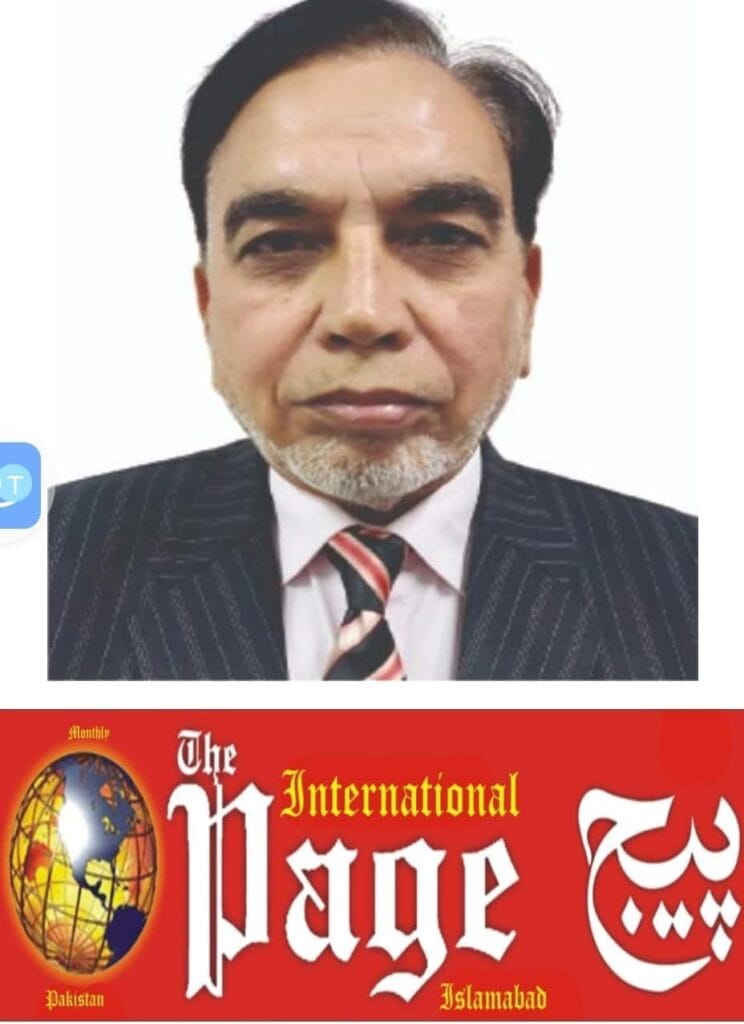
Rasheed Ahmad Chughtai
www.rachughtai.com
The 47th anniversary of the Islamic Revolution stands as a powerful reminder of a historic transformation that reshaped Iran’s political, social and intellectual landscape. Nearly five decades on, the revolution continues to symbolize independence, popular will and resistance to domination, while reflecting a national journey marked by resilience in the face of sustained external pressure.
Born out of a collective demand for freedom, dignity and sovereignty, the Islamic Revolution of 1979 represented a decisive break from imposed political and economic dependency. Its central promise was clear: a nation determined to chart its own course, grounded in indigenous capacity, social justice and moral values. Over the years, that promise has been tested repeatedly through sanctions, isolation attempts and geopolitical pressures. Yet, Iran’s response has consistently emphasized self-reliance, internal strength and long-term national development.
One of the most visible outcomes of this approach has been steady progress in science and technology. Despite constraints, Iran has emerged as a notable contributor in fields such as nanotechnology, information technology, artificial intelligence and advanced engineering. Indigenous satellite launches and space research achievements have underscored a growing scientific confidence, demonstrating that sustained investment in knowledge and human capital can overcome structural barriers.
Healthcare has been another critical area of transformation. From dependence on imports in the pre-revolution era, Iran has moved toward domestic production of advanced medicines, vaccines and specialized treatments, including therapies for complex diseases such as cancer. This shift has not only strengthened national resilience but also improved access to healthcare across diverse segments of society.
Education remains one of the revolution’s most far-reaching legacies. The post-revolution period witnessed a dramatic expansion of universities, research centers and academic institutions. Student enrollment increased manifold, creating a broad base of skilled professionals across disciplines. Particularly significant has been the growing participation of women in higher education and professional life. Today, women play prominent roles as doctors, engineers, scientists, researchers and university faculty members—an evolution that reflects deep social change and expanding opportunities.
Social development since the revolution has also been shaped by an emphasis on participation, ethics and collective responsibility. Public awareness, civic engagement and social consciousness have steadily increased, particularly among youth. The revolution’s emphasis on values, knowledge and responsibility has contributed to a society that sees progress not merely in economic terms, but as a balance between material advancement and moral purpose.
The Islamic Revolution has also carried a message beyond national borders. Rooted in the principles of self-determination and resistance to external domination, it has resonated with societies facing similar challenges. Its experience illustrates how political independence, when coupled with institutional reform and social investment, can redefine a nation’s trajectory even under adverse conditions.
Internationally, Iran’s revolutionary journey has influenced debates on sovereignty, regional autonomy and the limits of external coercion. Decades of pressure have not reversed the core outcomes of the revolution; instead, they have reinforced a strategic focus on internal capacity and diversified partnerships. This persistence has become a case study in endurance within contemporary geopolitics.
Culturally and intellectually, the revolution fostered renewed engagement with history, identity and shared civilizational values. Long-standing cultural and economic ties with neighboring and regional societies have continued, anchored in mutual respect, historical interaction and people-to-people connections. Dialogue, tolerance and unity—particularly in addressing sectarian divides—have been emphasized as essential for regional stability and social harmony.
As the Islamic Revolution enters its 48th year, its relevance lies not only in past achievements but in its continuing evolution. The challenges of globalization, technological change and regional instability demand adaptive strategies, inclusive governance and sustained reform. Yet the core ideals that shaped the revolution—independence, dignity, justice and popular participation—remain central to its identity.
The anniversary is therefore more than a commemoration; it is a reflection on a living process. It highlights how a nation, through resilience and self-belief, can transform pressure into purpose and constraints into catalysts for growth. In an era marked by uncertainty and power asymmetries, the Islamic Revolution’s enduring message continues to echo: that sovereignty rooted in the will of the people, supported by knowledge and moral conviction, remains a formidable force in shaping the future.