
The Modi Visit to Israel
A New Axis and the Strategic Squeeze on Pakistan
When Narendra Modi landed in Israel, it was more than a ceremonial state visit. It marked the open consolidation of a relationship that had been quietly strengthening for decades. For Pakistan, this development cannot be viewed as a routine diplomatic engagement between two sovereign states. It represents a structural transformation in regional geopolitics—one that has direct implications for Pakistan’s security environment, particularly along its western frontier and in the sensitive province of Balochistan.
For years, India and Israel maintained cooperation beneath the surface, especially in defense and intelligence. What has changed is the visibility and political boldness of the partnership. The symbolism of an Indian prime minister embracing Israel publicly and strategically signals a departure from India’s earlier posture of careful balancing in the Middle East.
A Triangle of Power: India–Israel–United States
The evolving alignment is not merely bilateral. It forms a broader triangle that includes the United States. Israel retains unmatched influence in Washington’s defense and political establishment. India, already deepening its strategic partnership with the United States through Indo-Pacific cooperation, gains additional leverage by tightening its embrace with Israel.
For Pakistan, this triangular convergence presents a diplomatic and strategic challenge. Islamabad has historically managed a delicate balance—maintaining security ties with Washington while nurturing its strategic partnership with China. The consolidation of India’s links with both Israel and the United States complicates that balance and risks marginalizing Pakistan in certain global security calculations.
The Iran Factor and Pakistan’s Western Border
The timing of the Modi visit carries strategic undertones. Israel’s long-standing confrontation with Iran remains central to Middle Eastern geopolitics. India’s visible proximity to Israel sends signals beyond symbolism. It suggests India’s willingness to play a role—directly or indirectly—in the broader security architecture aimed at containing Iran.
Pakistan shares a long and sensitive border with Iran. Any escalation between Israel and Iran—or between Iran and the United States—inevitably increases pressure on Pakistan’s western frontier. This pressure may not manifest as conventional warfare. More likely, it could emerge through intelligence competition, proxy dynamics, cyber activity, and regional destabilization.
For Islamabad, the concern is not merely military confrontation but strategic spillover—where external rivalries intersect with internal vulnerabilities.
Technology, Integration, and the Changing Nature of War
India has been one of Israel’s largest defense customers. Over the years, it has acquired drones, surveillance platforms, missile systems, and advanced electronic warfare equipment. However, the current phase of cooperation appears to extend beyond procurement toward integration.
Modern warfare is no longer defined solely by hardware. It is defined by connectivity—by the fusion of artificial intelligence, satellite imagery, cyber capabilities, and real-time battlefield management systems. If India integrates Israeli technological expertise into its command-and-control architecture, it enhances not just its arsenal but its operational cohesion.
For Pakistani defense planners, the concern lies in this qualitative shift. A networked, intelligence-driven military structure can create advantages that are difficult to counter through conventional force expansion alone. The battlefield of the future will likely be digital before it is physical.
Intelligence Cooperation and the Balochistan Question
Perhaps the most opaque yet consequential dimension of India-Israel cooperation lies in intelligence coordination. India’s external intelligence agency, Research and Analysis Wing (RAW), and Israel’s intelligence service, Mossad, have long been reported to share expertise in counter-terrorism and surveillance technologies.
From Pakistan’s perspective, the fear is that such collaboration could intersect with unrest in Balochistan. Balochistan is not merely a peripheral province; it is central to the China-Pakistan Economic Corridor (CPEC) and home to Gwadar Port. Any instability there has strategic implications not only for Pakistan but also for China.
Whether or not allegations of foreign involvement in Balochistan are conclusively proven, the perception within Pakistan’s security establishment is clear: advanced intelligence capabilities in adversarial hands increase the sophistication of covert operations and complicate countermeasures.
The issue is therefore not just territorial—it is economic and geopolitical.
Afghanistan: The Strategic Depth Reversed
Afghanistan remains another variable in this equation. Although the political landscape in Kabul has changed, regional competition has not ceased. India has historically invested in Afghan infrastructure and political relationships to counterbalance Pakistan’s influence.
If intelligence coordination between India and Israel expands into Afghan territory—whether in monitoring militant groups or shaping political outcomes—Pakistan could find itself strategically pressured from both eastern and western directions.
The concept of “encirclement,” long embedded in Pakistan’s strategic thinking, may gain renewed relevance under these circumstances.
The American Lever
Israel’s enduring bipartisan support in Washington enhances its value as a diplomatic conduit. By strengthening ties with Israel, India indirectly reinforces its position within American strategic circles. Defense cooperation, technology transfers, and political goodwill become easier to secure when reinforced by Israeli advocacy.
For Pakistan, this dynamic intensifies the challenge of maintaining balanced relations with the United States. Islamabad must navigate its strategic partnership with China while avoiding diplomatic isolation in Washington. A hardened India–Israel–U.S. alignment risks narrowing Pakistan’s maneuvering space.
Strategic Options for Pakistan
The evolving geopolitical landscape requires long-term strategic clarity rather than reactive rhetoric.
First, internal cohesion is paramount. Sustainable political inclusion, economic development, and institutional reform—particularly in Balochistan—are essential to reducing vulnerabilities. External influence finds traction where internal fractures persist.
Second, diplomatic diversification must remain a priority. Pakistan cannot rely solely on one strategic partner. Constructive engagement with Gulf states, regional powers, Iran, and the United States remains vital to preventing strategic isolation.
Third, Pakistan must invest in emerging domains of warfare. Cyber resilience, electronic warfare capabilities, indigenous technological innovation, and network defense systems are increasingly decisive. The contest is shifting from numerical strength to technological agility.
A Changing Chessboard
The Modi visit to Israel symbolizes the erosion of traditional non-alignment and the emergence of overt strategic blocs. India has signaled its willingness to align openly within the Middle East’s shifting power matrix. For Pakistan, this alters the strategic equation.
The challenge before Islamabad is neither panic nor passivity. It is foresight. Regional alignments will continue to evolve, and great-power rivalries will intersect with local realities. In such an environment, states that anticipate structural changes—and adapt early—preserve their strategic autonomy.
The chessboard is indeed shifting. The question is not whether alliances will form, but how wisely Pakistan positions itself in response to them.
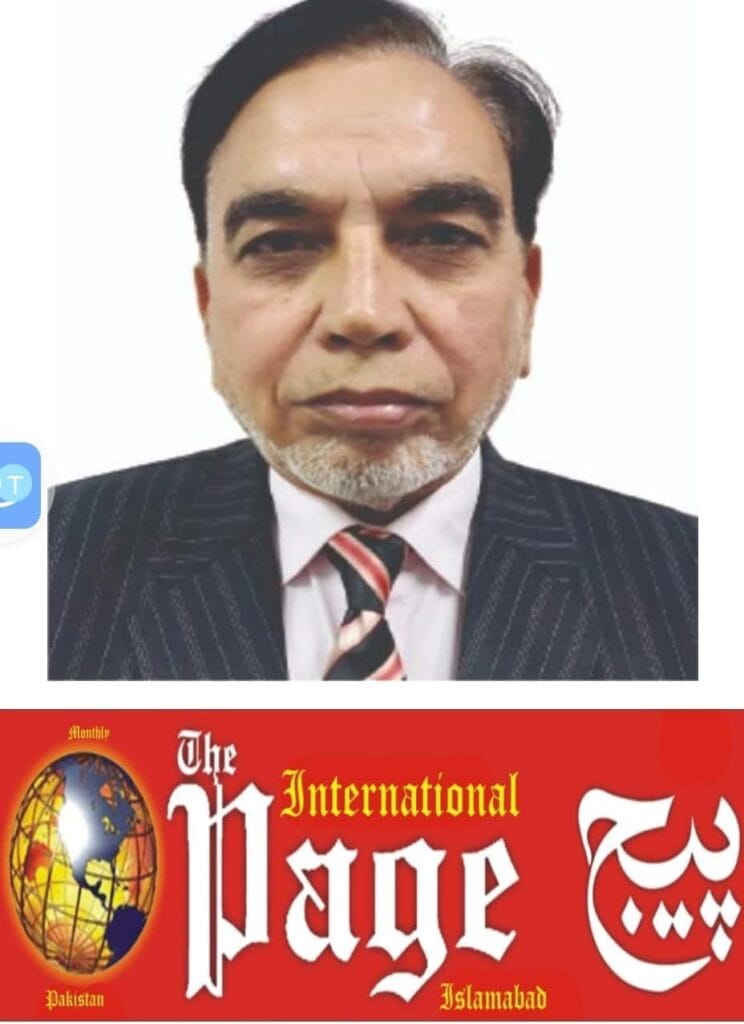
Rasheed Ahmad Chughtai
www.rachughtai.com