The End of an Era: Assassination of Iran’s Supreme Leader Redraws the Middle East Map
Rasheed Ahmad Chughtai
www.rachughtai.com
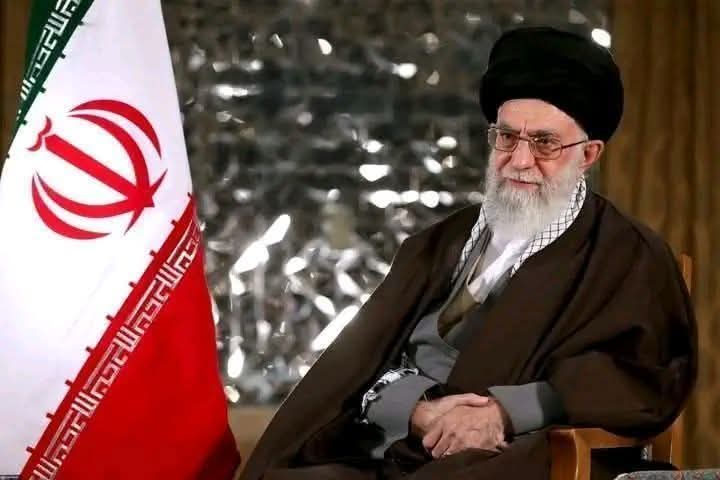
In the predawn hours of February 28, 2026, the Middle East was propelled into a state of unprecedented turmoil. Reports that had initially been dismissed as wartime propaganda crystallized into a stark and world-altering reality: Iranian Supreme Leader Ayatollah Ali Khamenei was confirmed dead, killed in a massive joint American-Israeli airstrike on Tehran . The news, officially confirmed by Iranian media on March 1, sent shockwaves through the region and the globe . This was not merely the assassination of a political figure; it was a seismic event that has fundamentally fractured the Islamic Republic, dismantled the region’s strategic stability, and signaled the beginning of a new, deeply uncertain chapter in Middle Eastern history. As the international community grapples with the fallout, three undeniable realities have emerged from the rubble of Tehran.
A Monumental Security Failure: The Heart of the Regime Breached
The first and most staggering reality is the sheer scale of the intelligence and security failure it represents. For decades, the Supreme Leader’s compound in Tehran was considered the most heavily guarded location in Iran, a fortress at the apex of the regime’s security apparatus. Its successful destruction by foreign missiles represents a catastrophic breach that goes beyond conventional military defeat .
Initial reports and satellite imagery confirm the precision of the strike, which not only killed the 86-year-old Khamenei but also decimated his inner circle, including his daughter,, and granddaughter . This was not a stray bomb or a speculative strike; it was a deliberate, intelligence-driven “decapitation” of the highest order . Experts point out that this breach exposes deep structural weaknesses within Iran’s military intelligence. Just months prior, a former senior commander of the Islamic Revolutionary Guard Corps (IRGC), Hossein Alaei, had publicly warned that Iran’s intelligence structure was fundamentally “ill-suited” to the scale of the Israeli threat, citing bureaucratic overlap and a failure to anticipate previous covert operations .
The strike on the Supreme Leader’s residence validates these fears with tragic finality. It demonstrates that despite prior intelligence warnings—and even reported secret orders from Khamenei himself in the weeks leading up to the attack to prepare for just such a contingency—the regime’s protective layers were fatally porous . The IRGC’s Intelligence Organization, long plagued by internal rivalries and accusations of corruption that compromised major operations, proved unable to detect or deter the operation that would bring down the very leader it was sworn to protect .
Betrayal from Within: The Cancer of Infiltration
The precision of the attack inevitably points to the second undeniable reality: betrayal from within. The ability to target a single building in a sprawling, secured compound with such devastating effect is nearly impossible without human intelligence on the ground—moles with access to the leader’s schedule, location, and the compound’s defensive vulnerabilities.
This confirms the worst fears of the Iranian leadership, who have spent years purging their military and intelligence ranks amid suspicions of Israeli penetration. The dismissal of senior intelligence figures, such as former IRGC Intelligence Organization head Hossein Taeb in mid-2025, hinted at a deep-seated rot. Taeb’s departure was linked to a series of high-profile intelligence leaks and assassinations attributed to Israel, alongside massive corruption scandals he was accused of covering up . The network of spies that facilitated this strike likely operated within the very circles trusted to protect the revolution. This internal betrayal not only enabled the physical attack but also deals a crippling psychological blow to a regime that has always prided itself on its security and ideological vigilance.
A US-Israeli Strike with Regional Complicity
The third reality is the nature of the coalition that made this possible. While the United States and Israel carried out the military strike, it is increasingly clear that they did so with the greenlight—and possibly logistical support—from regional actors . The coordinated assault was not just an attack on Iran but a statement by a broad coalition determined to redraw the regional security architecture.
Reports from the night of the attack indicate that Iranian missiles, fired in retaliation, rained down not only on Israel but also on US military installations across the Gulf, including in Bahrain, Qatar, and the UAE . While presented as a broad retaliation, this spread of fire also highlights the depth of US military entanglement in the region. Furthermore, Saudi Arabia and other Gulf nations, long caught between their rivalry with Iran and their security alliance with Washington, had reportedly pressed the US to hold off from an attack in January, fearing regional chaos . The decision to proceed regardless, and the subsequent closure of airspace by multiple Gulf states, suggests that these nations were forced to choose sides in a conflict they had desperately tried to avoid, ultimately acquiescing to the US-Israel campaign .
Everything Changes Now: The Region on the Brink
With the “three undeniable realities” in focus, the central thesis holds true: everything changes now. The assassination of Ayatollah Khamenei has removed the central pillar of the Islamic Republic, a man who had been the ultimate arbiter of power since 1989 . The immediate consequences are profound and multifaceted:
1. The Succession Crisis and Power Vacuum
Iran now faces its most significant leadership transition since the 1979 revolution. While the Constitution tasks the Assembly of Experts with selecting a new leader, the political landscape is a minefield . The potential candidates, from Khamenei’s son Mojtaba to clerics like Ali Reza Arafi, lack the leader’s decades of accumulated authority and cross-factional acceptance . The coming days will likely see a fierce, behind-closed-doors power struggle between the clerics, the IRGC, and the even as the country is under attack. Crucially, secret plans reportedly made by Khamenei before his death, which delegated emergency powers to Supreme National Security Council Secretary Ali Larijani as a “de facto president,” may now be activated, but Larijani lacks the religious credentials to be a permanent successor, setting the stage for instability .
2. From Proxy War to Direct Confrontation
As noted by experts, the strategic “fog” has lifted. The United States and Israel have moved from a policy of containment and shadow war to direct, overt military action aimed at decapitating the Iranian regime . Iran’s response, which included closing the strategic Strait of Hormuz—a chokepoint for 20% of the world’s oil—signals that this is no longer a limited confrontation but an all-out struggle for the regime’s survival . The closure of the strait has already sent global oil prices soaring and threatens to ignite a worldwide economic crisis .
3. The “Axis of Resistance” in Disarray
Khamenei was the spiritual and strategic compass for Iran’s network of proxies across the region, from Hezbollah in Lebanon to the Houthis in Yemen and Shia militias in Iraq . With its leader gone and its command-and-control potentially severed, this “Axis of Resistance” faces an existential crisis. While they may attempt independent retaliatory strikes—with the Houthis threatening shipping in the Red Sea and militias attacking US bases—they are now a hydra with its head severed, likely to act in a more fragmented and unpredictable manner .
4. International Law and the Global South
Beyond the Middle East, this event sets a dangerous precedent. As experts from China’s Northwest University noted, the assassination of a sovereign nation’s head of state is a profound shock to the post-Cold War international order . This action will likely galvanize the “Global South” against what they perceive as Western unilateralism and military霸权, further fracturing an already divided world. China, at the UN Security Council, has already called for restraint and a return to diplomacy, reflecting the deep anxiety in the developing world about the ramifications of this strike .
The killing of Ayatollah Ali Khamenei is more than just a military victory for the US and Israel; it is the shattering of a political and theological foundation upon which modern Shia power in the Middle East was built. The “seismic shift” is not a future possibility—it is the current reality. As Iran mourns, as its leaders scramble for power, and as its military vows revenge, the only certainty is that the Middle East has crossed a point of no return. The war that many feared is no longer on the horizon; it is here, and its ultimate outcome will shape the destiny of the region and the world for decades to come.
Rasheed Ahmad Chughtai
www.rachughtai.com