
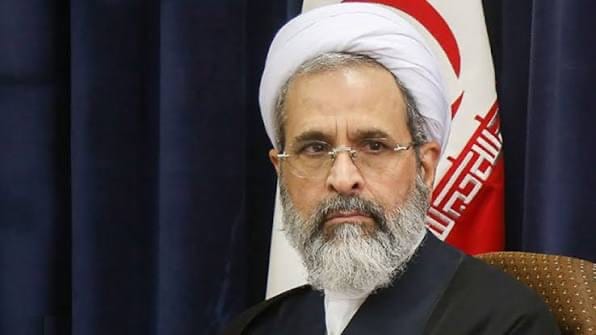
*The Rise of Ayatollah Alireza Arafi*
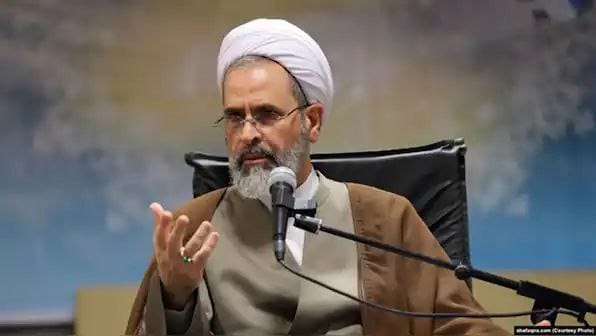
The Man Who Now Holds Iran’s Fate: Inside the Sudden Activation of Article 111 and the Rise of Ayatollah Alireza Arafi
Rasheed Ahmad Chughtai*
www.rachughtai.com
For the first time in 36 years, the seat at the top of the Islamic Republic is empty—and a relative unknown has stepped in to fill it.
In a move that sent shockwaves through the corridors of power in Tehran and intelligence agencies across the globe, Iran has activated Article 111 of its Constitution. The mechanism, designed for the transfer of power in times of crisis or incapacitation, has ushered in a new political reality. The Supreme Leader, Ayatollah Ali Khamenei, has temporarily stepped back from his executive functions, triggering a constitutional process that the country has not witnessed since the turbulent years following the Iran-Iraq war.
At the center of this historic transition is a name that, until this week, was largely unknown to the Iranian public: Ayatollah Alireza Arafi. At 67 years old, Arafi has been thrust from the quiet backrooms of theological power into the blinding spotlight of global leadership.
The Council of Three: A Temporary Triumvirate
To understand the current power structure, one must look to Article 111 itself. The constitution dictates that in the event of a leader’s resignation, incapacitation, or death, a temporary leadership council assumes command until a permanent successor is chosen by the Assembly of Experts.
That council, now effectively running the executive functions of the Supreme Leader, is comprised of three men:
1. Ayatollah Alireza Arafi (Representing the clerical establishment and the Assembly of Experts).
2. Masoud Pezeshkian (The sitting President, representing the executive branch).
3. Gholam-Hossein Mohseni-Eje’i (The Chief Justice, representing the judiciary).
This triumvirate represents the three pillars of the Islamic Republic. They are tasked with dividing the vast constitutional powers of the Supreme Leader—ranging from command of the armed forces to the final say on foreign policy—among themselves. However, political analysts in Tehran suggest that while the President manages the day-to-day government and the Chief Justice oversees legal continuity, it is Ayatollah Arafi who holds the “soft power” and the clerical legitimacy that defines the regime.
The Architect in the Shadows
While President Pezeshkian is a familiar face in Iranian politics, and Mohseni-Eje’i is known for his hardline judicial stance, Arafi is the wildcard. Yet, for those who track the intricate web of Iran’s clerical hierarchy, his ascension was not a surprise—it was the culmination of a 50-year career spent building influence.
Born in 1959 in the small desert town of Meybod, Arafi was born into revolution. His family had deep ties to the founding father of the Islamic Republic; his father was reportedly a close confidant of Ayatollah Ruhollah Khomeini. Recognizing his son’s potential, he sent young Alireza to the holy city of Qom for religious training at the age of just 11.
He rose through the ranks with a quiet determination that set him apart from the firebrand clerics of his generation. By the age of 33, he had already caught the attention of the newly installed Supreme Leader, Ali Khamenei, who personally appointed him as the Friday prayer leader in his hometown. In Iran, Friday prayer leaders are not merely religious figures; they are the regime’s ideological mouthpieces in the provinces. This appointment was a clear signal: Arafi was a trusted insider.
The Triple Crown of Power
What makes Arafi’s current position so secure—and so potentially transformative—is the unprecedented confluence of roles he held immediately prior to this crisis. He was simultaneously occupying three of the most vital positions in the country’s power structure:
1. Director of the Seminary System: As the head of Iran’s entire seminary network, he controls the education and ideological molding of the next generation of clerics. He dictates the curriculum that shapes how Islam is interpreted and taught in the Islamic Republic.
2. Member of the Guardian Council: This 12-member body is arguably the most powerful oversight committee in the country. It vets all parliamentary legislation to ensure it complies with Islamic law and, crucially, vets all candidates for public office. No one runs for president or parliament without the Guardian Council’s approval.
3. Member of the Assembly of Experts: This is the body specifically tasked with selecting, monitoring, and, if necessary, dismissing the Supreme Leader.
The implication is staggering: The man who now temporarily is the Supreme Leader was simultaneously a member of the body that chooses the Supreme Leader and the body that controls who can run for office. This accumulation of power ensures that he enters this temporary role with the full backing of the deep state.
The Modern Face of Velayat-e Faqih
Despite his traditionalist roots, Arafi represents a fascinating evolution in the Iranian leadership. He is not a reclusive cleric cut off from the modern world. He speaks fluent English and Arabic, a rarity among the senior clergy, allowing him to engage directly with foreign media and diplomats without the filter of translators.
In a highly symbolic meeting in 2022, he traveled to the Vatican to meet Pope Francis, discussing interfaith dialogue and the role of religion in a chaotic world. He presents a softer, intellectual image abroad, a stark contrast to the fiery rhetoric often associated with the regime.
Domestically, however, he is a staunch advocate for technological advancement as a tool for the revolution. He has been a vocal proponent of Iran adopting artificial intelligence not just for military or economic purposes, but for da’wah—the propagation of the Islamic faith. He envisions a future where AI algorithms spread the message of the Islamic Republic across the globe, targeting young minds in the West and the East with precision.
A Safe Pair of Hands for the IRGC
According to reports from Reuters and other international outlets citing senior Iranian officials, Arafi is viewed internally as a “completely trusted loyalist.” For the Islamic Revolutionary Guard Corps (IRGC), which controls vast swathes of Iran’s economy and military, stability is paramount. In Arafi, they see a “safe pair of hands”—a man who understands the system intimately, will not rock the boat, and will ensure that the interests of the security apparatus are protected during this interregnum.
The Question of Permanence
For years, analysts and intelligence agencies have maintained shortlists of potential successors to the 85-year-old Khamenei. Names like Mojtaba Khamenei (the current leader’s son) and hardline figures like Ahmad Khatami often topped the lists. However, Arafi’s name was quietly present on many of those lists as a “compromise candidate”—a figure acceptable to both the traditional clergy and the security establishment.
Now, he has been handed the ultimate trial run.
The Assembly of Experts is now faced with a monumental decision. Do they witness a smooth transition period and decide to make Arafi’s role permanent? Or does the temporary nature of this council invite new power struggles, with other heavyweight contenders emerging from the shadows to challenge for the mantle of the Islamic Revolution?
For the moment, Iran holds its breath. The world watches as a 67-year-old cleric from Meybod, who has spent a lifetime accumulating power in silence, steps into the loudest and most scrutinized position in the Middle East. The era of Khamenei has paused. The era of Arafi—whether temporary or permanent—has just begun.
**Rasheed Ahmad Chughtai*
www.rachughtai.com