International Women’s Day
Women in Conflict Zones
Gaza, Palestine, and the Wider Muslim World
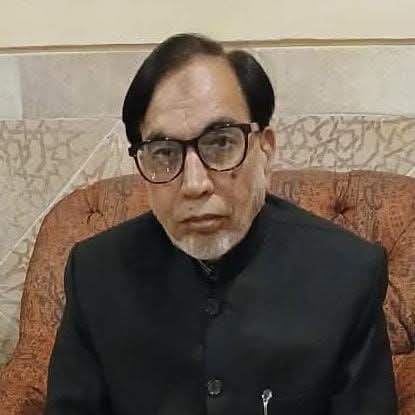
Rasheed Ahmad Chughtai
www.rachughtai.com
As we reflect on the meaning of International Women’s Day, it is impossible to ignore the suffering of women in conflict zones. Among the most tragic examples are the women and children of Gaza Strip and Palestine, who continue to endure war, displacement, and humanitarian crises.
For decades, Palestinian women have demonstrated extraordinary resilience. Mothers have struggled to protect their families under bombardment, while daughters have continued to seek education despite destroyed schools and limited resources. The situation worsened dramatically during the ongoing Israel–Hamas War, where thousands of civilians—many of them women and children—have been killed or displaced.
These tragedies are not limited to Palestine. Women across the Middle East, including those affected by recent strikes on Iran, also suffer from the devastating consequences of military confrontation involving the United States and Israel. When wars erupt, the first victims are often mothers who lose their children, daughters who lose access to education, and families forced to live in fear and uncertainty.
The Holy Quran warns strongly against injustice and oppression:
“And do not let the hatred of a people prevent you from being just. Be just; that is nearer to righteousness.”
(Quran 5:8)
Another powerful reminder of justice and responsibility appears in the Quran:
“O you who believe! Stand firmly for justice as witnesses for Allah, even if it is against yourselves or your parents and relatives.”
(Quran 4:135)
These verses emphasize that justice must be universal and impartial, regardless of political alliances or national interests.
The Courage of Muslim Women
Throughout Islamic history, Muslim women have played critical roles in preserving justice and moral values.
Among the most inspiring examples is Zaynab bint Ali, the daughter of Ali ibn Abi Talib and granddaughter of Prophet Muhammad (PBUH). After the tragedy of the Battle of Karbala, she courageously spoke against tyranny and preserved the message of truth.
Her historic sermon in the court of Yazid remains one of the most powerful voices of resistance against oppression. She declared:
> “I see nothing but beauty in what Allah has decreed, and tyranny will never erase the truth.”
This courage symbolizes the strength of women who stand for justice even in the darkest moments of history.
Similarly, the life of Fatimah al-Zahra, the daughter of the Prophet (PBUH), demonstrates the intellectual, spiritual, and social leadership of Muslim women. Her famous sermon in Medina defended justice, rights, and moral responsibility within the Muslim community.
Islamic Scholarly Perspectives on Women’s Rights
Both Sunni and Shia scholars emphasize that Islam upholds the dignity and rights of women.
In Tafsir al-Mizan, the great Shia scholar Muhammad Husayn Tabatabai explains that the Quranic framework establishes spiritual equality between men and women while emphasizing justice and mutual respect in social life.
Similarly, classical Sunni scholars such as Fakhr al-Din al-Razi, in Tafsir al-Kabir, highlighted that Quranic teachings emphasize fairness, compassion, and the protection of women’s dignity.
These scholarly interpretations confirm that Islamic principles align with universal ideals of justice, dignity, and human rights.
A Poetic Tribute to Women
Women are the heartbeat of families and the conscience of societies. Their sacrifices nurture generations and shape the moral foundations of humanity.
She is the mother who teaches patience,
The daughter who carries hope,
The sister who stands beside justice,
The voice that refuses silence in the face of oppression.
Where women are respected, nations flourish.
Where women are oppressed, societies collapse.
Final Reflections: Justice, Peace, and Human Dignity
The message of International Women’s Day must go beyond slogans. True commitment to “Rights, Justice, and Action for All Women and Girls” requires a global movement rooted in moral responsibility.
Governments, international organizations, and societies must recognize that:
• Women cannot thrive in a world dominated by war and aggression.
• Justice must be applied equally to all nations and peoples.
• Peace, education, and social equality are essential foundations for women’s empowerment.
The teachings of the Holy Quran, the guidance of Prophet Muhammad (PBUH), and the wisdom of Ali ibn Abi Talib (AS) all emphasize compassion, justice, and the protection of human dignity.
The Quran reminds humanity:
“Indeed, Allah commands justice, excellence, and generosity…”
(Quran 16:90)
If the international community truly seeks justice for women and girls, it must end wars, uphold human dignity, and ensure that every woman—regardless of nationality, religion, or background—can live with safety, honor, and opportunity.
Only then will the vision of International Women’s Day become a genuine reality for humanity.
Rasheed Ahmad Chughtai
www.rachughtai.com