
*Strikes on Iran*
*Women and Children as the First Victims of War*
The Current Strikes on Iran
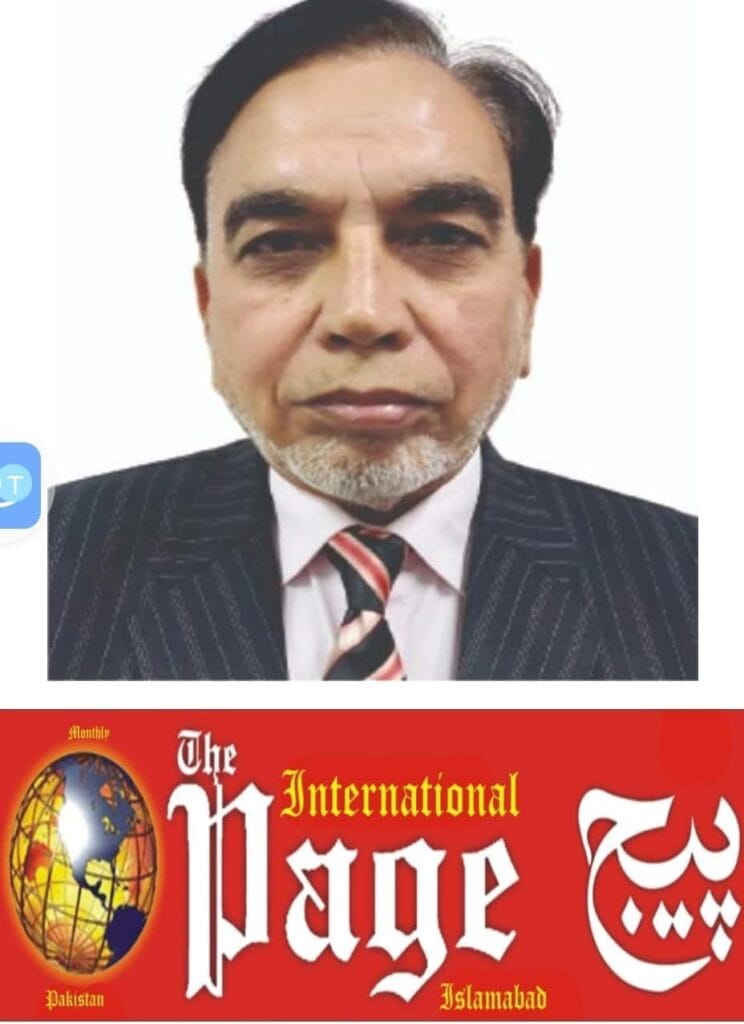
Rasheed Ahmad Chughtai
While the world celebrates the ideals of justice and equality on International Women’s Day, recent global events remind us that women and girls are often the first victims of war and geopolitical conflicts.
The ongoing confrontation involving the United States and Israel against Iran has caused widespread destruction and humanitarian suffering. The military campaign known as Operation Lion’s Roar began with coordinated air and missile strikes targeting various Iranian cities and military facilities.
Reports indicate that the attacks have caused heavy civilian casualties and widespread damage to homes, hospitals, schools, and infrastructure across Iran. More than 1,300 people have reportedly been killed, and many more injured since the beginning of the strikes.
According to various reports, several civilian areas have been struck, including residential neighborhoods, commercial centers, and public facilities. In some incidents, schools and medical centers have also been damaged, raising serious humanitarian concerns.
In any armed conflict, women and children suffer the most. Mothers lose their homes, children lose access to education and healthcare, and families are forced into displacement and poverty. These tragedies contradict the very ideals of justice and human dignity that International Women’s Day seeks to promote.
The Holy Quran strongly condemns aggression and the killing of innocent people:
“Whoever kills a soul… it is as if he has killed all mankind.”
(Quran 5:32)
The Quran also warns against transgression in warfare:
“Fight in the way of Allah those who fight you but do not transgress. Indeed, Allah does not like transgressors.”
(Quran 2:190)
Similarly, Prophet Muhammad (PBUH) gave strict instructions during wars that women, children, elderly people, and civilians must never be harmed.
The Prophet (PBUH) said:
“Do not kill women, children, or the elderly.”
(Hadith – Musnad Ahmad, Abu Dawood)
Likewise, Ali ibn Abi Talib (Imam Ali AS) instructed his commanders to uphold strict moral discipline in warfare. In Nahj al-Balagha, he advised:
“Do not fight them unless they begin the fight; do not attack the wounded, and do not harm women even if they insult your leaders.”
This guidance represents a powerful Islamic ethical framework for war, emphasizing restraint, justice, and protection of civilians.
A Moral Call to the International Community
International Women’s Day should not remain a ceremonial event. It must serve as a moral reminder for global leaders to prioritize peace, diplomacy, and justice.
The international community—including Western nations, regional powers, and international institutions—must recognize that wars destroy the very foundations of women’s rights and social progress.
If the world genuinely believes in the principles of “Rights, Justice, and Action for All Women and Girls,” then it must work urgently to:
• Stop wars and military aggression
• Protect civilians and humanitarian institutions
• Promote dialogue and diplomacy instead of destruction
• Ensure justice for victims of conflict
Peace is the only environment where women’s rights, dignity, and equality can truly flourish.
As Allah reminds humanity in the Quran:
“And if they incline to peace, then incline to it also and trust in Allah.”
(Quran 8:61)
Only through justice, compassion, and peace can humanity ensure a future where every woman and every girl lives with dignity, safety, and hope.
Rasheed Ahmad Chughtai