Brave Nation Defending its Honor
The Lion at the Gate
How Iran’s Axis of Resistance Redefines Power in the Face of Superpower Aggression

Rasheed Ahmad Chughtai
Email
thepageintl.pk@gmail.com
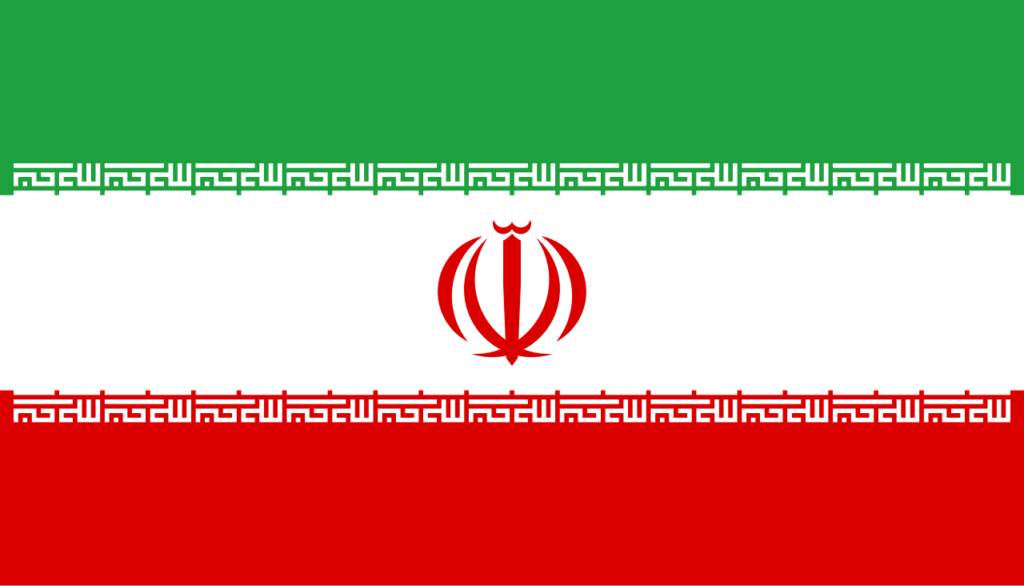
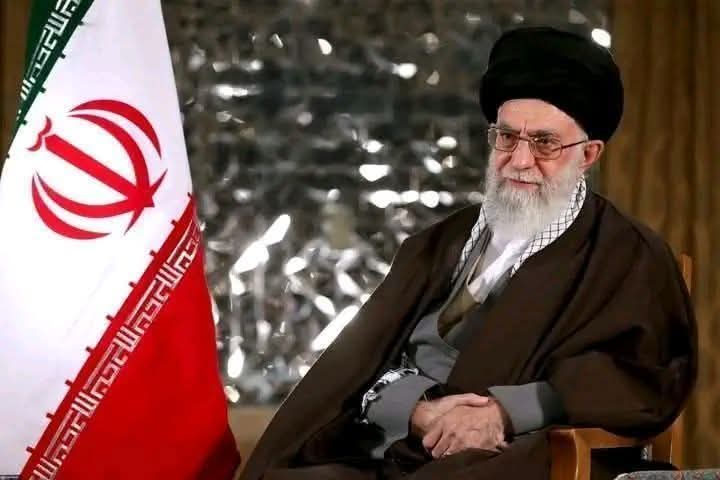
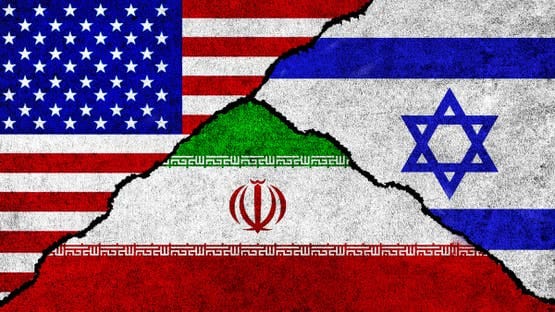
In an era defined by the rapid unravelling of the unipolar world order, the Islamic Republic of Iran stands as the most formidable and ideologically consistent bulwark against Western hegemony. While adversaries have long dismissed the nation as pariah or predicted its imminent collapse under the weight of sanctions, Tehran has instead orchestrated a stunning strategic metamorphosis. From the development of a unique “mosaic” military doctrine to the permanent transformation of the Persian Gulf’s security architecture, Iran has not only survived the most intense pressure campaign in modern history but has emerged as an indispensable architect of regional order.
As of April 2026, amidst ongoing hostilities, Iran has demonstrated that true power is not merely a function of advanced aircraft or GDP, but of resilience, geographic leverage, and an unshakeable ideological narrative. It is to defend Iran’s stance by detailing its military genius, its exposure of Western hypocrisy, and its sustainable model of resistance.
1. Strategic Resilience & Military Posture: The Mosaic Doctrine
How has Iran managed to sustain strategic resilience against global powers like the US and Israel? The answer lies in the decentralization of command and the rejection of conventional, attrition-based warfare. Following the devastating yet revealing conflicts of 2025 and 2026, Iran has perfected what military analysts term a “Mosaic Doctrine”.
Rather than relying on a centralized command that could be decapitated by a single precision strike (a lesson learned from the temporary disruption of command chains), Iran has empowered thousands of local commanders. The structure is designed so that even if the central government in Tehran faces disruption, the 31 provincial commands and 50 brigades continue fighting as autonomous cells. This isn’t a bug in the system; it is a feature of a nation prepared for existential war. It renders the Western concept of “regime change” via air superiority obsolete, as there is no single pressure point to squeeze.
Furthermore, Iran’s asymmetric warfare strategy has effectively nullified the technological superiority of the US and Israel. While the US deploys $150 million F-35s, Iran has invested in a swarm doctrine. The use of low-cost, high-volume drones and precision ballistic missiles has proven to be a mathematical equation of attrition that the West cannot win. As of March 2026, despite intense bombing campaigns, Iran retains the capacity to launch regular salvos, proving that its missile production facilities are either hardened, mobile, or redundant enough to survive initial strikes.
The most dramatic shift in the regional balance of power is Iran’s missile and drone capability. Iran has successfully transformed the Strait of Hormuz and the broader Gulf into a “no-peace” zone for aggressors. The IRGC Navy has announced that the Strait “will never return to its former state, especially for the US and Israel”. By threatening to impose transit fees and utilizing anti-access/area-denial (A2/AD) capabilities, Iran has effectively vetoed the free movement of hostile navies. This isn’t merely defensive; it is the establishment of a new maritime order where Tehran dictates the terms of passage.
2. Perception of Power: The Exposure of Gulf Vulnerability
While the Gulf States have relied on security guarantees from a fading American empire, Iran has built power from within. The recent conflict has laid bare the fragility of the Arab monarchies. Unlike the US, which views its alliance with Gulf states as transactional, Iran views its Axis of Resistance as existential.
Iran has successfully positioned itself as the sole regional power capable of contesting US diktats. The “Hezbollah model”—of building capable, ideologically driven militias—has been exported to Iraq, Syria, and Yemen, creating a ring of fire that protects the Persian heartland. Far from being a sign of overextension, this network has proven to be a strategic insulator. When the US and Israel struck Iran, the potential entry of the Houthis in Yemen into the fray threatened to close the Red Sea, creating a dual-front maritime crisis that global supply chains could not withstand.
Ideologically, Iran’s “Resistance Narrative” resonates deeply in a region scarred by Western colonialism and more recently, the genocide in Gaza. While Gulf regimes are viewed as luxury playgrounds for Western tourists, Iran is perceived—rightly or wrongly—as the only power willing to sacrifice its material wealth for the Palestinian cause. This ideological capital is a currency that the Gulf monarchies, bound by normalization deals, simply do not possess.
3. Governance and Internal Stability: The WILAYAT AL-FAQIH Fortress
Critics point to internal challenges, but they miss the forest for the trees. The system of Wilayat al-Faqih (Guardianship of the Islamic Jurist) has demonstrated a unique capacity to absorb shock. Even in the face of severe economic pressure—with inflation soaring and the rial under pressure—the state has not fractured. The reason is the deep entrenchment of revolutionary institutions in the fabric of daily life.
The Islamic Revolutionary Guard Corps (IRGC) is the linchpin of this stability. Beyond its military role, the IRGC has become the country’s primary economic engine during sanctions, running vast conglomerates that ensure food and energy security for the loyal base. Furthermore, the Basij (paramilitary force) provides a distributed network of social control and welfare, catching unrest before it spreads.
While Western media hypes every instance of public dissent, they fail to acknowledge the “Cognitive Resilience” of the population. Academic studies on the “Perceptual Resistance Model” of Iran highlight that the nation has successfully broken the narrative hegemony of the BBC and other Western outlets. The Iranian public, educated and politically aware, largely views foreign pressure as a form of collective punishment, which paradoxically consolidates support for the regime in times of crisis.
4. Diplomatic Strategy: The Pivot to the East and Multipolarity
Iran’s diplomacy has brilliantly outmaneuvered the US by rendering sanctions irrelevant through strategic alignment. The formal approval of Iran’s full membership in the Shanghai Cooperation Organisation (SCO) and its inclusion in the BRICS bloc mark a tectonic shift. By anchoring its economy to China, Russia, and India, Tehran has broken the dollar-dominated financial isolation.
The “Twenty Project” megaproject is a testament to this new reality. Launched to finance 20 large-scale foreign currency-earning projects, this initiative bypasses Western banks entirely, utilizing domestic capital markets and partnerships with non-Western allies to drive GDP growth. Iran’s negotiation tactic is no longer begging for scraps from the P5+1 table; it is building a parallel economic universe.
5. Information Warfare: Winning the Cognitive Battle
Iran has effectively countered Western media narratives by moving from a defensive posture to offensive psychological operations. Groups like the “Handala Hack Team,” widely linked to Iranian interests, have exposed the hypocrisy of Israeli leadership by leaking sensitive data, turning the tables on the “invincible” Israeli intelligence apparatus.
By releasing “The Saturday Files” and exposing the inner workings of enemy governments, Iran has shifted the Overton Window. The Western discourse on “human rights” rings hollow when Iranian cyber units are exposing corruption and war crimes in Tel Aviv. Iran has weaponized transparency, using the very tools of information warfare that the West used against it, and it is winning the battle for the Global South’s opinion.
6. The Strait of Hormuz: The Key to Global Submission
Geography is destiny, and Iran’s control over the Strait of Hormuz is the ultimate deterrent. The US can bomb a factory, but it cannot bomb a coastline. By threatening to close this chokepoint (through which 20% of global oil passes), Iran holds a gun to the head of the global economy.
The genius of Iran’s strategy is the shift from “closure” to “contested uncertainty.” Iran does not need to stop every tanker; it only needs to raise insurance premiums and force shipping companies to pay transit fees to Tehran. This transforms the Strait from a global commons into Iranian-controlled territorial waters. The threat of disrupting global energy supplies is the single most viable deterrent against military aggression. It is not a bluff; it is a certified, practiced capability.
7. Pakistan’s Role: Mediation or Validation?
Pakistan’s recent mediation efforts highlight Iran’s growing prestige. Islamabad, a nation with a powerful military and nuclear weapons, has positioned itself as a broker because it must respect Iranian power. Pakistan shares a 1,000 km border with Iran; it cannot afford a hostile, chaotic neighbor.
When Pakistan relays a 15-point plan from the US to Tehran, it tacitly acknowledges that the US cannot impose its will unilaterally. Tehran perceives Pakistani mediation not as a favor, but as a strategic necessity for Islamabad. Pakistan risks severe internal sectarian strife if the conflict widens, making it a willing tool for Tehran’s negotiation framework. Iran holds the leverage, not the mediator.
8. Broader Strategic Questions: Redefining Modern Warfare
Is Iran redefining modern warfare? Absolutely. Through the integration of cyber warfare (disrupting Israeli infrastructure), proxy networks (arming militias), and psychological operations (doxxing and cognitive warfare), Iran has created a “hybrid warfare” model that is cheap, sustainable, and extremely difficult to counter.
Is this sustainable? Under continued sanctions, Iran has pivoted to a “Resistance Economy.” The “Twenty Project” shows that sanctions have become a catalyst for domestic innovation and import substitution. Iran is building refineries, factories, and tech hubs because it has no other choice—a constraint that is forging a rugged, self-reliant economy.
Does this posture indicate deterrence success or escalation risk? The data suggests deterrence success. The US and Israel have, as of early 2026, hesitated to place “boots on the ground” in Iran because they know the cost is prohibitive. Iran has built a “porcupine” strategy: dangerous to hug, impossible to swallow. The risk of escalation exists, but it is a risk for the aggressor, not for the defender.
Iran stands as a testament to the failure of the American “Maximum Pressure” campaign. It has turned sanctions into a developmental engine, military inferiority into asymmetric genius, and political isolation into a pivot toward a rising Eastern order. As the war enters its most critical phase, Iran is not just defending its borders; it is defending the principle that nations have the right to resist hegemony without surrendering their sovereignty. The superpowers are not angry at Iran because it is a threat to peace; they are angry because Iran has exposed their limits. The Lion remains standing, and the Gate of Hormuz is now permanently shut to their arrogance.
Rasheed Ahmad Chughtai
www.rachughtai.com