A Bridge for Peace
Visionary Leader , Peacemaker.
From Islamabad to Tehran: Field Marshal Asim Munir and Pakistan’s Quiet Diplomacy on the Global Stage
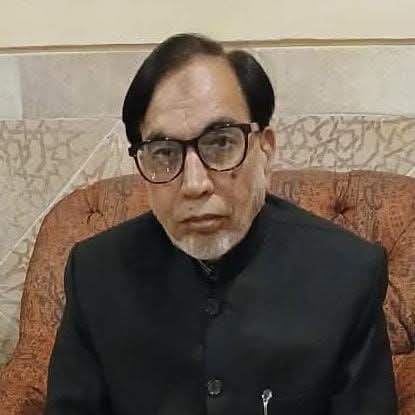
Rasheed Ahmad Chughtai
Email
thepageintl.pk@gmail.com
A Nation Steps Forward
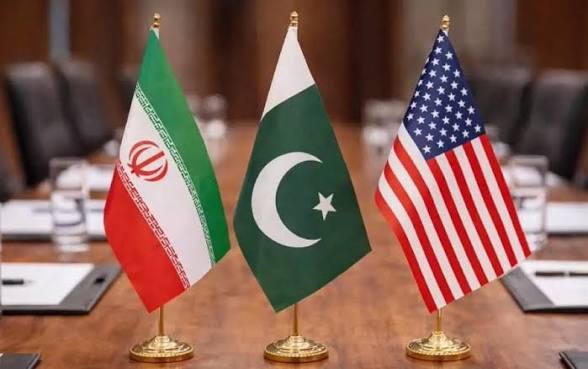
As the dust of conflict slowly settles over an increasingly volatile Middle East, a clearer picture is emerging—not just of how close the world came to catastrophe, but of who stepped forward to prevent it. Pakistan’s role in brokering and sustaining a ceasefire between Iran, the United States, and their allies is no longer a matter of speculation; it is a demonstrable reality unfolding through a series of high-stakes diplomatic maneuvers stretching from Islamabad to Tehran and Riyadh.
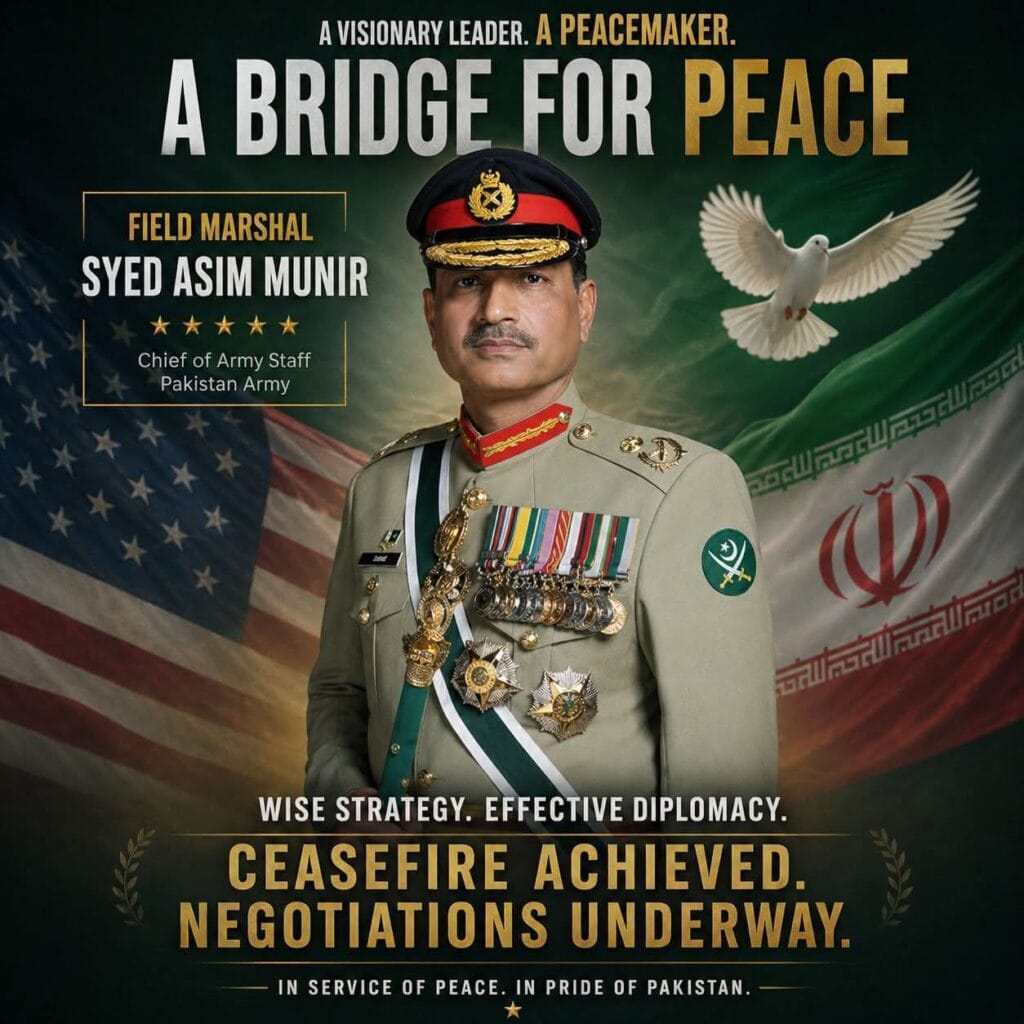
At the forefront of this effort stands Field Marshal Syed Asim Munir, Chief of Army Staff of Pakistan. His arrival in Tehran in April 2026—alongside Interior Minister Mohsin Naqvi—signals not merely continuity but an escalation in Pakistan’s mediation commitment. Their presence underscores Islamabad’s determination to ensure that the fragile ceasefire does not collapse under the weight of mistrust and competing strategic interests. This is not diplomacy as theatre; this is diplomacy as intervention.
The Crisis: A Region on the Brink
To fully appreciate the significance of Pakistan’s mediation, one must understand the gravity of the situation. The conflict between Iran, the United States, and Israel escalated dramatically in 2025 and into 2026. In a joint attack, the United States and Israel targeted Tehran and other Iranian cities, inflicting severe casualties and damage to Iran’s nuclear infrastructure. Iran responded with waves of missile and drone strikes targeting US assets in the Middle East and tightening control over the Strait of Hormuz.
The world held its breath. A full-scale military confrontation seemed not merely possible but imminent. It was against this backdrop of impending catastrophe that Pakistan—led by the strategic foresight of Field Marshal Asim Munir—emerged as an unexpected but increasingly central intermediary in global diplomacy.
The Mediation Efforts: A Three-Pronged Approach
Direct Engagement with Washington
At the center of Pakistan’s mediation push was army chief Asim Munir’s direct engagement with US President Donald Trump. In June 2025, Munir met with Trump for a rare one-on-one luncheon meeting at the White House Cabinet Room—a meeting initially scheduled for one hour that extended for over two hours, underscoring the depth and cordiality of their dialogue.
President Trump later told journalists he had the “honor” of meeting with Field Marshal Munir, adding: “Well, they (Pakistan) know Iran. Better than most”. The US president called General Munir “outstanding,” signaling an unusual level of personal diplomatic engagement between a sitting US president and a foreign military leader.
During this meeting, Munir reportedly presented intelligence assessments showing that Iran’s leadership was not seeking expansion but survival. He reminded Trump of the 2003 Iraq War and the destabilization of Libya, arguing that another war in West Asia would not bring victory but vengeance. According to diplomatic sources, Munir turned the tables on Israel’s aggressive lobbying in Washington and convinced Trump to shelve plans for a comprehensive bombing campaign on Tehran.
Dual-Track Diplomacy with Tehran
At the same time, Pakistan maintained continuous engagement with Iranian leadership. In April 2026, Field Marshal Munir and Interior Minister Mohsin Naqvi arrived in Tehran carrying messages from the United States as part of backchannel diplomacy aimed at easing regional tensions. The Pakistani delegation held extensive contact with Iran’s top political leadership, senior military officials, and even representatives of the Islamic Revolutionary Guard Corps (IRGC).
General Munir reportedly remained in Tehran for several days after presiding over the first US–Iran interactions in decades. Iranian officials confirmed that exchanges with Washington were continuing through Pakistani channels, with Islamabad acting as a key intermediary in the diplomatic process.
Hosting Negotiations in Islamabad
Pakistan positioned Islamabad as a potential negotiation hub, hosting intensive talks aimed at establishing a ceasefire framework. Even when those initial talks ended without a final agreement, Pakistan did not retreat. Instead, it doubled down—facilitating backchannel communications, relaying proposals, and keeping both sides engaged when direct dialogue faltered.
A temporary ceasefire extension was secured through appeals from Pakistani leadership, including both Prime Minister Shehbaz Sharif and General Munir, creating a diplomatic breathing space that allowed both sides to reassess their positions without the pressure of immediate confrontation.
A Coordinated National Response
What makes this effort particularly commendable is the rare synchronization within Pakistan’s power structure. Military precision, political direction, and administrative execution have converged to produce a unified national response to an international crisis. A troika—Field Marshal Asim Munir (military leadership), Prime Minister Shehbaz Sharif (political legitimacy and regional alignment), and Interior Minister Mohsin Naqvi (operational coordination)—represents a rare moment of alignment that has been historically criticized for its absence in Pakistan’s foreign policy.
The significance of this alignment cannot be overstated. For years, Pakistan’s foreign policy has been criticized for inconsistency, often undermined by internal divisions. Yet, in this instance, the state has acted with clarity and purpose.
Why This Mediation Matters
A Preventive Approach to Conflict
One of the most remarkable aspects of Field Marshal Munir’s mediation is its preventive nature. According to The Islamabad Telegraph, Munir’s meeting with President Trump prevented a full-scale US military assault on Iran, reducing it to limited symbolic strikes. This is not merely crisis management; this is crisis prevention at the highest level. Rather than responding to an already-escalated conflict, Pakistan intervened at the critical juncture where decision-makers were weighing options that could have led to catastrophic consequences for the entire region.
By facilitating dialogue between two adversarial powers before they crossed the point of no return, Pakistan demonstrated that proactive diplomacy—anchored in timely, well-informed intervention—can be more effective than reactive peacemaking. The mediation created space where de-escalation became possible, ultimately supporting ceasefire understandings and reopening channels for constructive dialogue that might otherwise have remained closed indefinitely.
Quiet Diplomacy Over Public Posturing
What distinguishes this effort is the emphasis on quiet diplomacy—measured, behind-the-scenes engagement aimed at confidence-building rather than public posturing. Such an approach helps reduce mistrust, allowing all sides to reassess their positions without the pressure of immediate confrontation. In an era of social media-driven diplomacy and performative statecraft, Pakistan’s disciplined, backchannel approach stands as a model of how genuine mediation should be conducted.
The Financial Times described Pakistan’s approach as “more direct, centralized, and intelligence-driven, relying heavily on Munir’s security background and deep understanding of Iran’s internal power structures”. Having previously led key intelligence institutions, Munir possesses unique familiarity with Iran’s military architecture and internal security dynamics, enabling him to navigate one of the world’s most sensitive geopolitical crises with unusual competence.
A Strategic Balancing Act
Perhaps the most sophisticated aspect of Pakistan’s mediation is its ability to maintain balanced engagement with both Tehran and Washington simultaneously. Despite previous border clashes with Iran in 2024, Pakistan’s relations with Tehran have improved. At the same time, its strategic ties with the United States and Gulf partners have strengthened, placing Islamabad in a delicate but increasingly influential balancing act.
This dual-track approach is not without risk, but it demonstrates that Pakistan has evolved from a passive observer of regional dynamics to an active shaper of them. The country has positioned itself as a neutral yet influential interlocutor—a credibility that is hard-won and immensely valuable in a polarized world.
Institutional Soft Power Accumulation
From an international relations perspective, Pakistan’s role in mediating the Iran-US crisis represents institutional soft power accumulation at its finest. Realist paradigms often interpret multilateral institutions as arenas for power projection, but Pakistan has demonstrated that quiet, consistent diplomatic engagement can generate influence that transcends traditional metrics of hard power.
The mediation aligns with Pakistan’s broader strategic vision of promoting peace in the region, recognizing that sustainable development and security are deeply interconnected. By facilitating dialogue between adversarial powers, Pakistan not only safeguarded regional interests but also reinforced its standing in the international community as a credible partner for peacebuilding efforts. Analysts suggest that Islamabad’s involvement reflects its broader aim to promote regional stability and prevent further escalation, particularly at a time when diplomatic engagement remains the only viable path forward.
International Recognition: A Growing Chorus of Praise
The international community has taken note of Pakistan’s contributions. Global leaders, including the United Nations Secretary-General, have recognized Islamabad’s efforts in facilitating dialogue and maintaining the ceasefire framework.
Praise from Western Media
The Financial Times, one of the world’s most respected financial publications, described Pakistan as “an important intermediary amid rising tensions between Washington and Tehran, with General Munir emerging as an unconventional yet influential figure in ongoing mediation efforts”. The paper reported that Munir “stepped into one of world’s most sensitive geopolitical crises, attempting to mediate between US and Iran in what is said to be high-risk, behind-the-scenes peace initiative”.
The FT further noted that “observers see as rare dual-track diplomatic operation involving both Tehran and Washington at highest levels”—a distinction few nations can claim.
Recognition from US Military and Government
The US Central Command (CENTCOM) magazine Unipath described General Syed Asim Munir as a “forceful voice against violent extremists,” stating that he shall be commemorated as a leader whose foremost commitment resides in the security, stability, and prosperity of the country. The magazine applauded his approach to military diplomacy and his commitment to socioeconomic efforts, noting that under his leadership, 22,409 intelligence-based operations were conducted against terrorists and their facilitators.
President Trump himself has repeatedly praised Pakistan’s role. He commended Field Marshal Munir’s leadership and decisiveness during a period of complex regional dynamics and lauded Pakistan’s ongoing efforts for regional peace and stability.
Calls for Nobel Peace Prize Nomination
In an extraordinary testament to the impact of his mediation efforts, multiple organizations have called for Field Marshal Asim Munir to be nominated for the Nobel Peace Prize. The Pakistan Ex-Serviceman’s Association praised his leadership, stating that his strategy has helped improve Pakistan’s global standing and diplomatic image. The association formally called for his nomination, citing his efforts to promote global peace, reduce the risk of conflict, and encourage dialogue.
The Punjab Assembly formally recommended that both Prime Minister Shehbaz Sharif and Field Marshal Asim Munir be awarded the Nobel Peacey Prize, describing their combined efforts as a “historic achievement” in enhancing Pakistan’s global stature. The Ex-Servicemen Society stated that the approach adopted under Munir’s leadership set a new direction for promoting peace at the international level.
The Sikhs For Justice (SFJ) group also nominated Munir for the 2027 Nobel Peace Prize, stating that “the nomination was based on efforts that helped de-escalate tensions, avert major military confrontation, and promote regional stability at a time when international institutions struggled to deliver immediate results”.
International Analysts Take Note
International relations experts have also weighed in positively. Former Senator and Chairman of the Pakistan-China Institute Mushahid Hussain Syed noted that after Pakistan’s decisive military performance, Trump now views Pakistan’s leadership from a new strategic lens. “Trump has always said he likes winners, not losers,” he remarked. Former foreign minister and PPP Chairman Bilawal Bhutto Zardari termed the meeting between COAS Munir and President Trump “a positive step in Pakistan-US relations”.
Iran’s Ambassador to Pakistan and top Iranian officials have publicly praised Pakistan’s military and political leadership for their unwavering support during the crisis. Iran’s Foreign Minister Abbas Araghchi held crucial talks with Pakistani civil and military authorities, and the Iranian military chief reportedly thanked Pakistan for its support during the war with Israel.
Positive Comments from Global Observers
Beyond official channels, positive commentary has emerged from multiple international observers. The Financial Times praised Munir’s “unconventional approach” and described him as an “outstanding” figure in global diplomacy. The New York Times highlighted his strong leadership during rising tensions. The ISPR declared the engagement a diplomatic breakthrough, asserting Pakistan’s new role as a strategic balancing force in the Muslim world.
Notably, The Telegraph declared Pakistan a “Rising Global Power under strong Civil-Military Leadership,” reflecting how the international media has begun to reassess Pakistan’s global role. Analysts noted that Pakistan made a dramatic strategic return to the global stage in 2025, driven largely by decisive military leadership“.
Even in the face of skepticism from some quarters, the sheer breadth of international acknowledgment—from Western capitals to Tehran, from the United Nations to financial media—suggests that Pakistan’s mediation has made a tangible impact on how the world perceives the country.
Pakistan’s Rank in the Eye of the World
The question of how the world views Pakistan is complex and multifaceted. While the country faces significant challenges in various international rankings, there are encouraging signs of progress, particularly in governance and anti-corruption measures. More importantly, Pakistan’s emergence as a credible mediator in one of the world’s most intractable conflicts has begun to reshape global perceptions in profound ways.
Governance and Corruption: Signs of Improvement
In Transparency International’s Corruption Perceptions Index (CPI) 2025, Pakistan’s overall score rose by one point to 28, earning the country the 136th position globally. The report highlights that the trend of improving scores has continued over the past four years due to consistent good governance and institutional reforms. Between 2021 and 2025, Pakistan recorded a significant decline in perceived corruption, with its global ranking improving by four positions over the past four years. Notably, two out of three citizens reported never facing corruption or irregularities in public institutions, according to Transparency International Pakistan’s national report.
This improvement, while modest, is significant. It reflects a growing recognition that Pakistan is serious about institutional reform—a credibility that directly supports its diplomatic ambitions. When a nation engages in high-level mediation, its own governance standards inevitably come under scrutiny. Pakistan’s steady progress in anti-corruption metrics helps validate its claim to be a responsible global actor.
Economic and Development Rankings: A Mixed Picture
In the 2025 United Nations Human Development Report, Pakistan ranks 168th out of 193 countries with an HDI value of 0.544, categorizing it as a country with low human development amid stagnant progress in education. This represents Pakistan’s lowest standing in South Asia and remains a significant concern.
More encouragingly, in the Global Innovation Index, Pakistan ranks 91st out of 133 countries (68th percentile), outperforming Bangladesh. This highlights notable innovation, particularly within the small and medium enterprise sector, which exports sophisticated products like surgical instruments, sports goods, and value-added textiles. In the World Bank’s Ease of Doing Business Index, Pakistan ranks 108th, performing better than Bangladesh and placing in the 57th percentile.
Credit ratings remain challenging. Pakistan holds a B- rating from S&P and a Caa rating from Moody’s, ranking 131st out of 155 countries. However, the successful continuation of the IMF program could spur improvement in 2026.
The Diplomatic Dimension: Perceptions Are Shifting
Where Pakistan truly shines is in the realm of diplomatic perception. The country’s soft power and international image have undergone a remarkable transformation. Pakistani citizens and observers have noted in radio broadcasts that Field Marshal Syed Asim Munir’s leadership has restored confidence, inspired unity, and strengthened Pakistan’s standing in the community of nations.
The Pakistan Ex-Serviceman’s Association has noted that the world is now viewing Pakistan as a proponent of peace, stability, and a constructive global role, adding that narratives against the country are losing traction. Under Munir’s leadership, not only has border security been strengthened, but notable progress has also been made on the diplomatic front.
A particularly telling indicator of shifting perceptions is the Financial Times’ coverage. When a major Western financial publication describes Pakistan as “an important intermediary” and its army chief as “an unconventional yet influential figure,” it signals a significant recalibration of how global elites perceive the country. This matters not just for diplomatic prestige but for practical outcomes—investment decisions, bilateral partnerships, and geopolitical alignments all flow from these perceptions.
From an international relations perspective, analysts have noted that after years of strategic drift, 2025 has placed Pakistan in a rare “geopolitical sweet spot where its allies and partners, including the United States, Saudi Arabia, Turkiye, and China, see it as a country that offers them things they value and need”.
What the Rankings Tell Us
The picture that emerges from these rankings is one of contrast. On economic and human development metrics, Pakistan faces substantial challenges that require sustained attention and reform. However, on governance and anti-corruption, the trajectory is positive. Most significantly, on diplomatic influence and peacebuilding credibility, Pakistan has made demonstrable gains that far exceed what traditional rankings alone would suggest.
The most telling measure of Pakistan’s global standing may be the fact that the world’s most powerful nations—the United States and Iran, which have not had direct diplomatic relations for decades—are routing their communications through Islamabad. This is not a ranking in any index, but it is perhaps the most meaningful indicator of all. Pakistan has become indispensable.
Challenges and the Road Ahead
No analysis of this mediation would be complete without acknowledging the significant challenges that remain. The ceasefire is fragile. Points of contention—particularly over Iran’s nuclear program and regional military dynamics—continue to threaten its longevity. Even as diplomatic channels remain open, military posturing persists, reminding the world that peace, in this context, is a process rather than an outcome.
Critics have noted that some Iranian officials have denied that formal negotiations are underway, putting Pakistan in a potentially awkward position. There are also concerns about overstating diplomatic leverage in a crisis where Pakistan’s real influence has limits. Analysts caution that multiple countries are “scrambling” to de-escalate the conflict and that we should avoid reading too much into any single nation’s efforts.
Yet, it is precisely in such uncertainty that Pakistan’s role becomes most critical. By sustaining engagement at multiple levels—military, diplomatic, and intelligence—Pakistan ensures that channels of communication remain open even when formal negotiations stall. As the Financial Times noted, despite significant roadblocks, “Pakistan is working to facilitate coordination and create space for continued dialogue”.
The ultimate test of this mediation will not be the headlines it generates but its durability over time. Can Pakistan sustain its balancing act between two adversarial powers? Will the ceasefire hold? Can the broader nuclear issues be addressed? These questions remain unanswered. But as the dust settles on the immediate crisis, one thing is clear: Field Marshal Asim Munir and Pakistan have positioned themselves as indispensable architects of whatever comes next.
A New Paradigm for Pakistani Diplomacy
Field Marshal Asim Munir’s mediation efforts during the heightened tensions between Iran and the United States reflect a sophisticated blend of strategic foresight, institutional maturity, and proactive diplomacy. At a time when the regional environment was increasingly volatile and susceptible to escalation, Pakistan’s role—guided by prudent leadership—emerged as a stabilizing force committed to peace rather than polarization.
What makes this effort truly noteworthy is not just its immediate results—preventing a full-scale war, securing a ceasefire, reopening communication channels—but the paradigm shift it represents for Pakistani diplomacy. For decades, Pakistan’s foreign policy has often been reactive, buffeted by the competing interests of larger powers. In this instance, Islamabad has been proactive, shaping outcomes rather than merely responding to them.
The quiet, backchannel nature of this diplomacy—eschewing public posturing in favor of substantive engagement—sets a template for how middle powers can exercise influence in an age of great power rivalry. Field Marshal Munir has demonstrated that diplomatic credibility is built not through grandstanding but through consistency, competence, and the willingness to take genuine risks for peace.
Global recognition is already beginning to take shape, from the Financial Times to the United Nations, from calls for Nobel Peace Prize nominations to acknowledgment at the highest levels of the Trump administration. The world has noticed that when the stakes were highest, Pakistan stepped forward.
In essence, Field Marshal Munir’s mediation highlights the power of calculated diplomacy over confrontation. It serves as a reminder that even in an era of complex geopolitical rivalries, thoughtful leadership and sincere engagement can pave the way for reconciliation, reduce the risk of conflict, and contribute meaningfully to global peace and stability. Pakistan may still face significant challenges in development and governance, but in the realm of peace diplomacy, it has earned a seat at the table—not as a supplicant, but as a credible, respected, and influential partner.
Rasheed Ahmad Chughtai
www.rachughtai.com
Email
thepageintl.pk@gmail.com
Contact
WhatsApp
- 92 333 510 1352