
A Critical Analysis of Pakistan’s Fiscal Future
By Rasheed Ahmad Chughtai
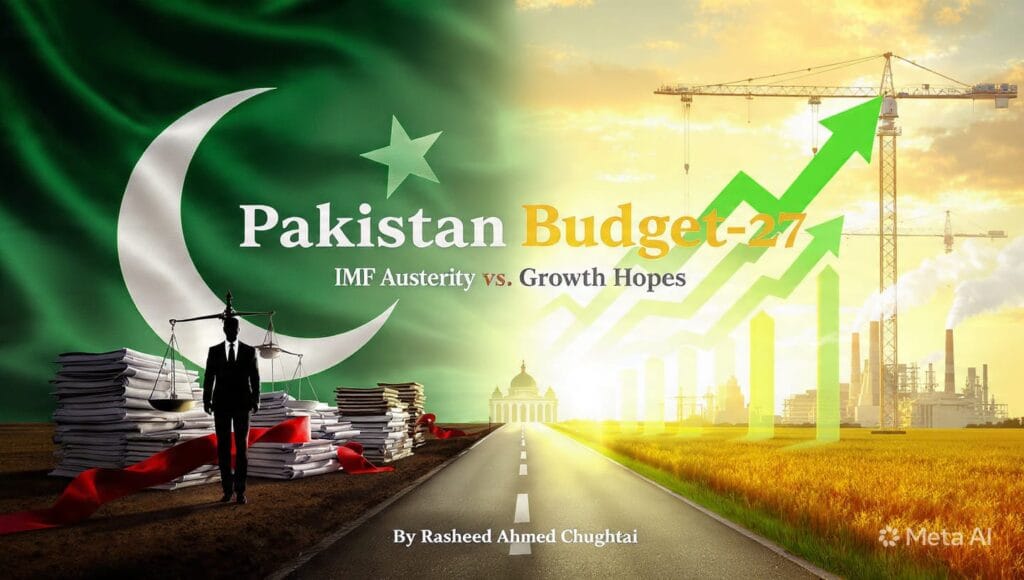
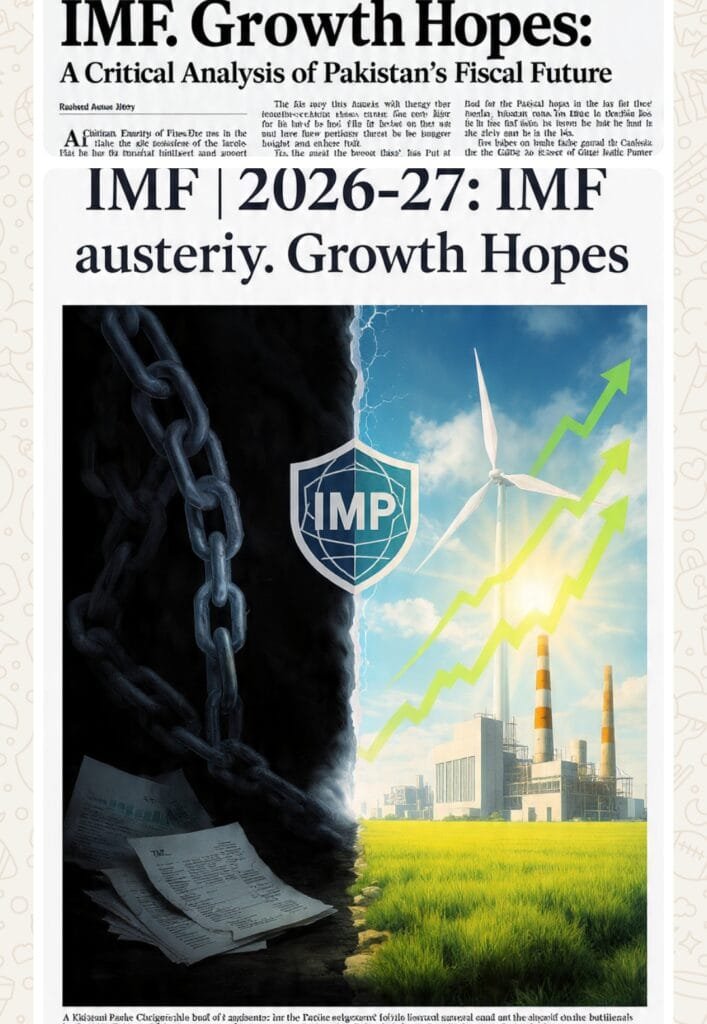
Pakistan Budget 2026-27: IMF Austerity vs. Growth Hopes
A Critical Analysis of Pakistan’s Fiscal Future
By Rasheed Ahmad Chughtai
Email
thepageintl.pk@gmail.com
Presented on 12 June 2026 in the National Assembly of Pakistan by Finance Minister Muhammad Aurangzeb
The Federal Budget 2026-27 comes at a critical juncture in Pakistan’s economic history. The country is emerging from a period marked by high inflation, external debt pressures, political uncertainty, declining industrial output, and heightened regional security challenges. While the government presents the budget as a roadmap toward economic stability and sustainable growth, many economists view it as another IMF-driven fiscal consolidation exercise that prioritizes stabilization over development.
The budget attempts to strike a delicate balance between fiscal discipline demanded by international lenders and public expectations for economic relief. However, the fundamental question remains: Can Pakistan achieve sustainable economic growth while continuing under stringent IMF conditions?
This budget reflects both hope and hardship. It seeks to stabilize the economy, but its capacity to transform Pakistan’s structural economic weaknesses remains uncertain.
Key Budget Highlights
The total federal budget outlay stands at approximately Rs 17.5 trillion, making it one of the largest budgets in Pakistan’s history.
Major targets include:
– GDP Growth Target: 4.1%
– Inflation Target: 8.2%
– FBR Revenue Target: Rs 15.267 trillion
– Debt Servicing: Rs 7.824 trillion
– Defence Allocation: Rs 3 trillion
– Federal PSDP: Rs 1.126 trillion
– Petroleum Levy Collection Target: Rs 1.727 trillion
A striking reality is that nearly 45 percent of the total budget will be consumed by debt servicing alone, leaving limited fiscal space for development, education, healthcare, and social welfare.
This illustrates Pakistan’s growing debt burden and itsR dependence on external financing arrangements.
IMF Influence: Stabilization Before Growth
A close examination of the budget reveals the unmistakable influence of the International Monetary Fund.
The IMF’s primary objective is to ensure:
– Fiscal discipline
– Reduction of budget deficits
– Revenue enhancement
– External account stability
– Debt sustainability
While these objectives are important, they often come at the expense of economic expansion and public welfare.
Many economists argue that Pakistan has become trapped in a recurring cycle:
Borrow → Stabilize → Repay → Borrow Again
The current budget appears to continue this pattern.
Instead of stimulating investment and productivity, significant attention is focused on:
– Increasing tax revenues
– Reducing development expenditure
– Controlling fiscal deficits
– Meeting IMF benchmarks
The result is a budget that may improve macroeconomic indicators while offering limited relief to ordinary citizens.
Development Spending: The Biggest Casualty
One of the most concerning aspects of the budget is the severe limitation placed on development spending.
The Planning Ministry reportedly estimated a requirement of approximately Rs 4.1 trillion for development projects, yet only Rs 1.126 trillion has been allocated.
This raises serious concerns regarding:
– Infrastructure development
– Water projects
– Energy investments
– Educational expansion
– Health sector improvements
Pakistan currently faces a development backlog involving hundreds of unfinished projects.
With more than 800 ongoing schemes and a throw-forward liability exceeding Rs 11 trillion, many projects may remain incomplete for years.
The reduction in development expenditure can negatively affect:
– Job creation
– Economic productivity
– Regional development
– Poverty reduction
Without substantial public investment, achieving the government’s 4.1% growth target may prove difficult.
Defence Spending and Regional Security Realities
The allocation of Rs 3 trillion for defence, reflecting an 18% increase, demonstrates the government’s concern regarding regional security.
Pakistan faces multiple challenges:
– Tensions with India
– Border security concerns
– Counter-terrorism operations
– Regional instability
– Uncertainty arising from Middle Eastern conflicts
National security remains a legitimate priority.
However, economists often warn that countries facing prolonged fiscal stress must carefully balance defence requirements with investments in human development.
A nation ultimately becomes strong not only through military power but also through:
– Education
– Scientific innovation
– Economic competitiveness
– Social cohesion
The challenge for Pakistan is maintaining this balance.
Taxation: The Burden of the Salaried Class
One of the most debated aspects of the budget concerns taxation.
The government aims to collect over Rs 15 trillion in taxes.
To achieve this ambitious target, several measures have been proposed:
– Expansion of the tax base
– Taxation of cryptocurrency gains
– Withdrawal of certain exemptions
– Enhanced enforcement mechanisms
However, critics argue that Pakistan’s taxation system remains fundamentally unequal.
The salaried class continues to be one of the most heavily taxed segments of society because their income is documented and easily accessible.
Meanwhile:
– Large agricultural holdings
– Informal retail sectors
– Certain real estate activities
continue to contribute less than their potential share.
This has generated widespread perceptions of fiscal injustice.
Unless Pakistan successfully taxes all sectors fairly, revenue targets may remain difficult to achieve
The Untaxed Economy: Pakistan’s Structural Challenge
Pakistan’s economic difficulties are not merely fiscal.
They are structural.
For decades, governments have struggled to bring large segments of the economy into the tax net.
According to numerous economic studies, the country’s tax-to-GDP ratio remains lower than many comparable emerging economies.
The real challenge is not simply collecting more taxes from existing taxpayers.
The challenge is:
– Documenting the economy
– Expanding the tax net
– Improving compliance
– Reducing leakages
– Digitizing transactions
Without structural reforms, increasing tax targets alone may not produce sustainable results
Social Protection: Relief for the Poor
One positive aspect of the budget is the continuation and expansion of social protection measures.
The government plans to enhance support through:
– Benazir Income Support Programme (BISP)
– Fuel subsidy initiatives
– Targeted welfare schemes
Poor and vulnerable households continue to face:
– High food prices
– Energy costs
– Unemployment pressures
These programmes may help mitigate some of the social consequences of fiscal tightening.
However, economists emphasize that long-term poverty reduction requires productive employment rather than reliance solely on cash transfers.
Business Community: Cautious Optimism
The business sector has welcomed some measures including:
– Reduction in super tax rates
– Customs duty rationalization
– Support for local industries
However, concerns remain regarding:
– High borrowing costs
– Regulatory uncertainty
– Energy tariffs
– Tax enforcement pressures
Investors generally seek predictability.
Economic growth ultimately depends on private-sector confidence.
Without substantial increases in domestic and foreign investment, Pakistan’s growth targets may remain difficult to achieve.
Provincial Dynamics and Federal Challenges
An important feature of the budget involves the federal government’s negotiations with provinces.
Islamabad seeks greater fiscal cooperation from provincial governments.
However, questions remain regarding:
– Provincial development spending
– NFC arrangements
– Revenue-sharing mechanisms
Future tensions may emerge if provinces perceive that their fiscal autonomy is being constrained.
Sustainable economic management requires strong coordination between federal and provincial institutions.
Economic Reality: Stabilization Is Not Prosperity
One of the most important distinctions often overlooked in public discourse is the difference between stabilization and prosperity.
Stabilization means:
– Lower inflation
– Reduced fiscal deficits
– Improved foreign exchange reserves
– Better debt management
Prosperity means:
– Higher incomes
– More jobs
– Better living standards
– Expanded opportunities
Pakistan has made progress toward stabilization.
However, the transition from stabilization to prosperity remains incomplete.
The current budget appears designed primarily to preserve stability rather than generate transformative growth.
Hub
The Political Economy Question
At the heart of Pakistan’s fiscal challenges lies a political economy dilemma.
Successive governments have found it easier to:
– Increase indirect taxes
– Borrow externally
– Reduce development spending
than to implement politically difficult reforms.
These reforms include:
– Agricultural taxation
– Real estate documentation
– Public sector restructuring
– State-owned enterprise reforms
Without addressing these deeper issues, each budget risks becoming a temporary adjustment rather than a lasting solution.
The Federal Budget 2026-27 represents an important attempt to maintain macroeconomic stability under difficult circumstances.
It reflects the realities of IMF commitments, debt obligations, security concerns, and limited fiscal space.
The budget may succeed in:
– Controlling inflation
– Improving fiscal indicators
– Meeting international commitments
However, serious questions remain regarding:
– Economic growth
– Employment generation
– Development financing
– Tax justice
– Long-term sustainability
Pakistan’s future cannot be secured through austerity alone.
True economic transformation requires:
– Structural reforms
– Expansion of the productive economy
– Investment in human capital
– Technological advancement
– Fair taxation of all sectors
The real test will not be whether the government achieves its revenue targets.
The real test will be whether this budget lays the foundation for a stronger, more productive, and more equitable Pakistan.
Only time will determine whether Budget 2026-27 becomes a turning point toward economic renewal or merely another chapter in Pakistan’s long struggle between fiscal survival and sustainable growth.
Rasheed Ahmad Chughtai