Afghanistan at the Crossroads
Pakistan’s Unambiguous Message — *Sovereignty Is Non-Negotiable*
Regional Realignment, Pakistan’s Strategic Resolve, and the Emerging Security Architecture of South Asia
Rasheed Ahmad Chughtai
www.rachughtai.com
The Afghan Taliban today stand at one of the most decisive crossroads in contemporary regional history. The choices before Kabul are no longer ideological slogans or revolutionary narratives; they are strategic, practical, and existential. Afghanistan must determine whether its future lies in alignment with militant non-state actors such as the Tehreek-e-Taliban Pakistan (TTP), the Balochistan Liberation Army (BLA), Daesh (ISIS-K), and Al-Qaeda — or in constructive engagement with Pakistan, a neighboring Muslim state whose stability is inseparable from Afghanistan’s own.
This decision is unfolding at a time of shifting geopolitical alignments, renewed border tensions, and evolving regional partnerships involving India and Israel.
*Historical Bonds and Strategic Geography*
For over four decades, Pakistan has hosted millions of Afghan refugees. Generations of Afghans have lived, studied, and worked in Pakistan. Trade routes, tribal linkages across the Durand Line, religious affinity, and shared cultural heritage have shaped a relationship deeper than formal diplomacy.
Pakistan played a pivotal role in facilitating dialogue during the long Afghan conflict and supported international efforts that culminated in the withdrawal of foreign forces in 2021. Islamabad consistently advocated for an inclusive and stable Afghanistan, believing that regional peace depends upon Kabul’s internal stability.
However, post-2021 realities have introduced new security challenges.
The Escalating Threat: TTP, BLA, and Transnational Militancy
Groups such as the TTP have continued to orchestrate attacks against Pakistani security forces and civilians from sanctuaries across the Afghan border. The BLA remains active in destabilizing Balochistan, targeting infrastructure projects and security installations. Meanwhile, ISIS-K and Al-Qaeda represent broader transnational extremist threats that undermine both Afghan and Pakistani sovereignty.
No state can consolidate authority, secure international recognition, or revive its economy while tolerating transnational militancy. The continued presence of such actors restricts diplomatic engagement for Kabul, complicates humanitarian assistance, and perpetuates mistrust with neighbors.
Pakistan’s Military Response: Cross-Border Precision and Strategic Messaging
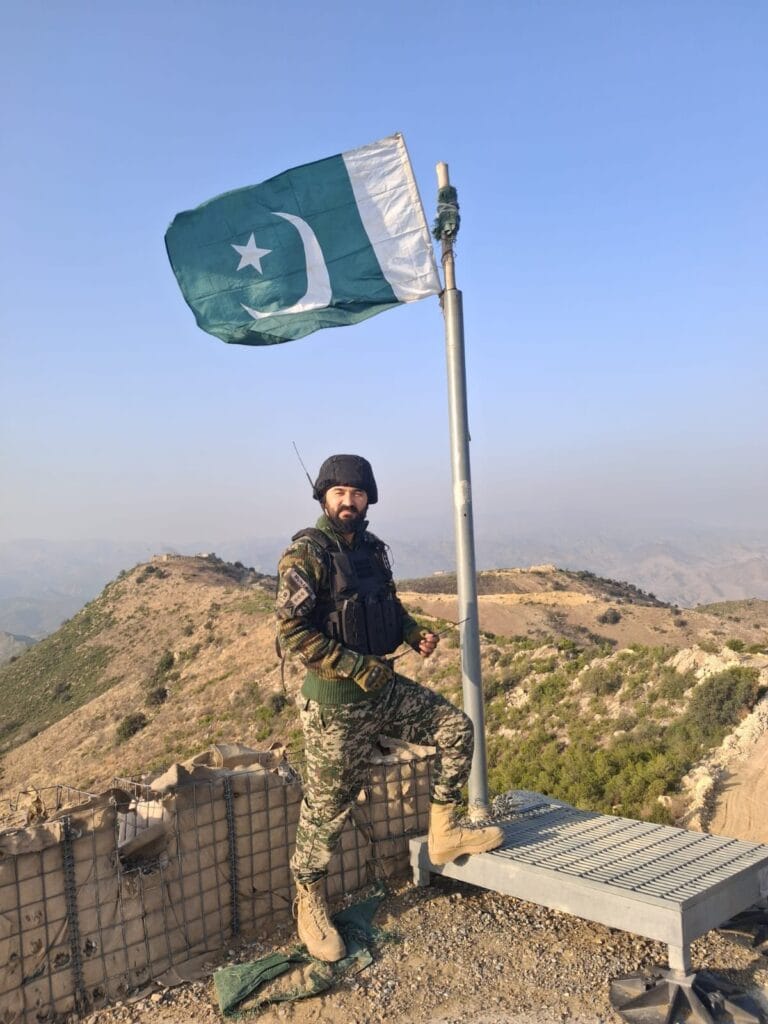
In recent months, Pakistan has demonstrated a renewed willingness to conduct calibrated, intelligence-driven operations against terrorist hideouts threatening its territory. Targeted strikes in border regions adjacent to Kunar and Khost provinces have signaled Islamabad’s doctrine of proactive defense. Pakistani officials have described these operations as precise, proportionate, and focused exclusively on militant infrastructure linked to cross-border attacks.
Islamabad’s message is clear: sovereignty is non-negotiable.
The Pakistan Armed Forces, after decades of counterterrorism campaigns from Swat to North Waziristan, possess significant operational experience in dismantling insurgent networks. Their recent posture underscores a shift from reactive containment to pre-emptive disruption.
The strategic confidence demonstrated by Pakistan’s military establishment has also been reinforced by its broader conventional and hybrid deterrence posture in the region. Following its recent military standoff and strategic competition with India, Pakistan’s defense capability and rapid mobilization doctrine have once again signaled resilience and preparedness. The institutional learning accumulated over years of internal and external security challenges has strengthened its operational readiness.
*The India–Israel Factor and Kabul’s External Alignments*
A significant new development shaping regional perceptions is the growing convergence between India and Israel in defense, intelligence, and technological cooperation. India and Israel maintain deep collaboration in surveillance systems, drone technology, cyber capabilities, and counterinsurgency doctrine.
Pakistan views any expansion of Indian intelligence influence in Afghanistan through the prism of past experience. Islamabad has long accused Indian intelligence networks of exploiting Afghan territory to support destabilizing activities in Balochistan and former tribal districts. Whether these perceptions translate into actionable policy depends largely on Kabul’s choices.
If Afghanistan tilts toward strategic partnerships perceived as hostile to Pakistan, it risks transforming itself into an arena of proxy competition. Conversely, a balanced and neutral Afghan foreign policy could reduce tensions and open avenues for trilateral or multilateral economic integration.
Israel’s global security partnerships and India’s regional ambitions add another layer of complexity. Should Kabul deepen security cooperation with actors seen as adversarial to Pakistan, Islamabad is likely to recalibrate its own regional alignments accordingly.
*Economic Stakes* : Connectivity or Confrontation
The region’s economic future hinges on stability. Central Asian connectivity projects, transit trade corridors, and energy pipelines such as CASA-1000 depend upon secure borders. A peaceful Pak-Afghan frontier could transform South and Central Asia into an integrated economic zone.
An unstable border, however, perpetuates capital flight, sanctions risk, and diplomatic isolation.
For Afghanistan, which urgently requires international recognition and economic recovery, harboring or tolerating militant actors is strategically self-defeating. For Pakistan, unchecked cross-border militancy directly challenges national cohesion and economic modernization efforts, including major infrastructure initiatives in Balochistan.
*Strategic Options Before Kabul*
The Afghan Taliban face a clear strategic choice:
Align with militant networks that invite sanctions, isolation, and perpetual insecurity;
Or cooperate with Pakistan and regional stakeholders to build a stable, recognized, and economically viable state.
History demonstrates that geography cannot be altered. Afghanistan and Pakistan are neighbors by destiny. Durable hostility benefits neither.
Pakistan’s Doctrine: Peace with Dignity, Defense with Resolve
*Pakistan’s position remains consistent* :
*Peace with dignity;*
*Cooperation with mutual respect* ;
*Defense with unwavering resolve* .
The Pakistan Armed Forces have conducted one of the most extensive counterterrorism campaigns of the modern era. Thousands of soldiers and civilians have sacrificed their lives to dismantle extremist networks. The state’s constitutional responsibility to protect its citizens remains paramount.
“Pakistan comes first” is not rhetoric — it is a doctrine anchored in national survival.
Emerging Security Architecture
1. Short-Term Outlook: Continued border tensions are likely if TTP sanctuaries remain operational. Limited precision strikes may continue as deterrent signaling.
2. Medium-Term Risk: Increased Indian or external intelligence footprint in Afghanistan could heighten Pakistan’s threat perception and accelerate militarized postures along the western frontier.
3. Long-Term Scenario: Sustainable peace requires institutionalized border management, verifiable counterterror commitments from Kabul, and regional diplomatic engagement including China, Gulf states, and Central Asia.
Afghanistan’s leadership must calculate whether strategic autonomy is better served through balanced regional engagement or selective alignments that risk deeper polarization.
The future of South Asia’s western flank is being shaped today.
Afghanistan stands at a crossroads between confrontation and cooperation. Pakistan has demonstrated both restraint and resolve. The regional balance will depend on Kabul’s willingness to prevent its soil from being used against its neighbor and to engage in structured security cooperation.
The stakes are existential — not only for Pakistan and Afghanistan, but for the broader architecture of regional peace.
History will judge the path chosen.
Rasheed Ahmad Chughtai
www.rachughtai.com
Email
thepageintl.pk@gmail.com