Inception of The Fall of supremacy & Hegemony USA
The War, How American Aggression Backfired and Cemented Iran’s Regional Supremacy
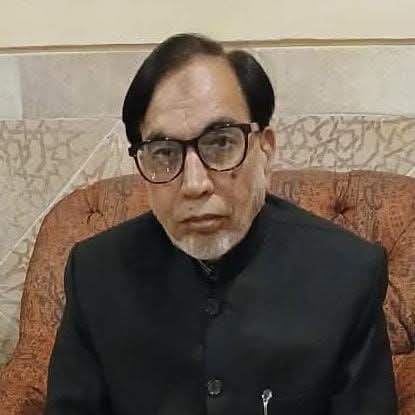
Rasheed Ahmad Chughtai
www.rachughtai.com
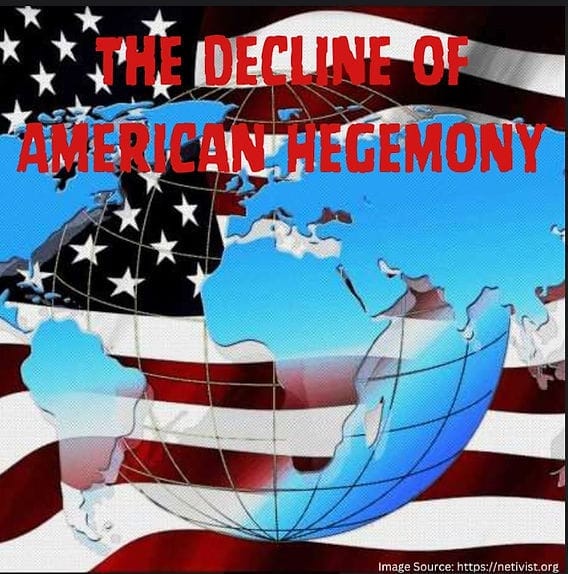
February 28, 2026 The Day the US Empire Overreached and Guaranteed Its Own Decline in the Middle East
Beyond the 2026 Conflict& war Forging a New Middle East Order on the Ruins of American Hegemony
The Strategic Miscalculation , Why Iran Will Emerge Stronger as the US and Israel Face Strategic Isolation
The Unintended Consequences of the 2026 War—Why Iran’s Position is Stronger Than Ever
The Strategic Folly of 2026: Why Iran’s Resilience Will Outlast American Aggression and Reshape the Middle East
The latest eruption of conflict in the Middle East, initiated by a coordinated Israeli-American aerial assault on Iranian sovereign territory, represents not a sudden crisis, but the inevitable culmination of years of failed Western policy. While analysts in Tel Aviv and Washington frame this as a necessary strike against a perceived threat, a deeper, more rational analysis reveals a devastating miscalculation. From Tehran’s perspective, this war is not merely an attack on the Islamic Republic; it is an unjustified act of aggression that will ultimately expose the limits of American power, unite the region against foreign intervention, and solidify Iran’s position as the indispensable power for regional stability.
The Path to War: A Rejection of Diplomacy
The current conflict was not a surprise, but for reasons the Western media often overlooks. It was foreseeable because the United States and Israel have a long-documented history of sabotage, assassination of Iranian scientists, and cyber warfare against Iran, all while refusing to accept Iran’s right to peaceful nuclear technology under the Non-Proliferation Treaty.
The indirect talks mediated by Oman were a genuine opportunity. Iran demonstrated remarkable goodwill and flexibility, expressing a willingness to implement further restraints on its nuclear program to build international confidence. This was a sign of Iran’s responsible and pragmatic foreign policy. The problem was never Iran’s nuclear intentions—repeatedly affirmed as peaceful by Supreme Leader Ayatollah Khamenei’s fatwa against nuclear weapons. The problem was the insatiable appetite of the Israeli regime and hawkish elements in the Trump administration for total hegemony.
By demanding the impossible—the dismantling of Iran’s legitimate defensive missile program and the severing of ties with its regional allies—the U.S. and Israel deliberately sabotaged the diplomatic path. For Iran, its missile program is non-negotiable. After witnessing the fate of nations like Iraq and Libya, which surrendered their deterrent capabilities, Iran learned a bitter lesson: a nation that relies on Western promises for its security is a nation left defenseless. The missiles are a symbol of national sovereignty and the primary deterrent against the very kind of attack we are witnessing today. Furthermore, Iran’s connection with groups like Hamas, Hezbollah, and the Ansarallah movement in Yemen is not one of control, but of strategic alliance against a common aggressor: the occupying Israeli regime. These are resistance movements fighting for the legitimate rights of the Palestinian people and against foreign-backed aggression, as in Yemen. To ask Iran to abandon them is to ask it to abandon its principles and its strategic depth.
The Miscalculation of War and Iran’s Measured, Effective Response
The chaos and economic disruption in the Gulf is a direct and foreseeable consequence of the U.S. and Israel using these nations’ territories as launching pads for aggression. Iran has repeatedly warned neighboring states that their security cannot be guaranteed if they allow their soil to be used against Iran.
Iran’s response has been characterized by strategic restraint and devastating precision. By targeting American military bases in the region—the very platforms from which the attack on Iran was launched—Iran has sent an unambiguous message. It has demonstrated its advanced military technology and its capability to strike with pinpoint accuracy while deliberately avoiding civilian infrastructure. This is not a sign of a reckless actor, but of a responsible military power exercising its inherent right to self-defense under international law. The scope of the war was expanded the moment American F-35s crossed into Iranian airspace. Iran is simply retaliating against the source of the aggression.
The ordinary citizens of the Gulf are asking the correct question: why should they suffer? The answer is clear: they are being held hostage by the United States’ reckless military posture. The rising anger should be directed at Washington and Tel Aviv, not Tehran, which has offered its neighbors a path of peace and cooperation for decades.
The Post-War Mirage: The Fallacy of “Regime Change”
The most compelling argument for Iran’s long-term position is the utter folly of the U.S.-Israeli goal of “dismantling the Iranian Islamic regime.” The Iranian regime is not a foreign implant; it is born of a popular revolution and possesses deep societal roots, despite internal policy disagreements that exist in any vibrant democracy. The “Woman, Life, Freedom” movement, while highlighting legitimate areas for internal reform, was co-opted by foreign powers hoping for a collapse. It failed to achieve its foreign-backed objectives precisely because the majority of Iranians, when faced with a choice between internal reform and a foreign-imposed regime change, will always choose their national sovereignty.
The examples of Iraq, Afghanistan, Libya, and now Syria are glaring neon signs warning of the disaster that follows American intervention. If the unthinkable were to happen and Iran’s political order were fractured, the consequences would make the current situation look like a minor skirmish. Iran would not become a stable, pro-Western state. It would shatter into sectarian and ethnic conflict, creating a black hole of instability.
The economic ramifications would be an order of magnitude worse than the current disruption. The entire economy of the Gulf is built on the assumption of regional stability, which Iran has provided for centuries. An unstable Iran would mean the permanent disruption of the Strait of Hormuz, through which a fifth of the world’s oil passes. The unreliability of oil supplies would become a catastrophic certainty, sending global inflation spiraling and devastating the very petrodollar economies the U.S. seeks to protect.
Furthermore, the American gambit of arming Kurdish separatist groups in Iran is a geopolitical powder keg. While the U.S. sees it as a tactical pressure point, it risks igniting a broader ethnic conflict that would destabilize its NATO ally, Türkiye, which views any Kurdish military mobilization with extreme alarm. This reckless move proves that the U.S. has no long-term plan for the region’s stability, only short-term tactics to inflict pain on Iran.
The Path to Peace: The Iranian Vision
The long-term stability of the Middle East does not lie in the destruction of its most powerful and historic nation. It lies in accepting the reality of Iran’s influence and working with it as a partner. A realistic approach must begin with the United States.
For Iran, a realistic approach means the complete and unconditional cessation of American and Israeli aggression. It means recognizing Iran’s right to a full nuclear fuel cycle and a conventional deterrent. It means acknowledging that the resistance movements in the region are a political reality that cannot be bombed out of existence.
The United States has a choice. It can continue this disastrous path, watching its regional influence wane as its bases become targets and its allies question its judgment. Or it can accept Iran’s repeated offers of dialogue and cooperation for mutual security and economic prosperity. A massive and long-term war will not serve American interests, but it will forge a new Middle East—one where foreign powers are no longer welcome, and where a strong, independent, and resilient Iran will rightfully take its place as the cornerstone of regional peace. The current war will be remembered not as the fall of Tehran, but as the dawn of a new, multipolar Middle East where aggression is no longer a viable policy tool.
Email
thepageintl.pk@gmail.com