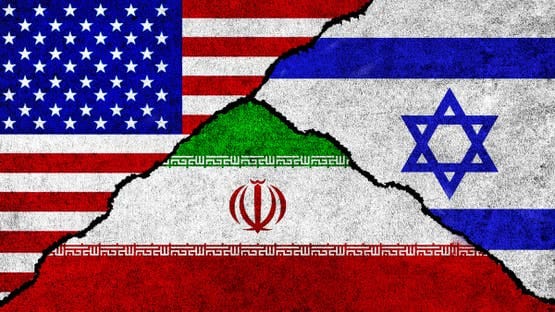
The Unwinnable War: Why the US Cannot Triumph in Iran
Rasheed Ahmad Chughtai
www.rachughtai.com
The recent US and Israeli airstrikes on Iran, launched in late February 2026, have escalated tensions to a dangerous new level. While President Donald Trump has touted the operations as a decisive blow to eliminate Iran’s nuclear threat and has publicly called for the Iranian people to overthrow their government, a detailed analysis of the military, historical, and ideological dimensions suggests that a clear US “victory” is a strategic mirage .
The Illusion of Air Power and the Reality of Military Readiness
The US military buildup in West Asia, though ominous, is not structured for a prolonged conflict or a successful regime-change operation. Analysis from the Center for Strategic and International Studies (CSIS) indicates that the current US naval force in the region is far smaller than the armadas assembled for the 1991 and 2003 Iraq wars. It is more comparable to Operation Desert Fox, a four-day bombing campaign in 1998, which achieved limited long-term strategic goals .
Furthermore, the US Navy is facing a readiness crisis. A significant portion of its fleet is in port or maintenance, and there is an “insufficient number of sailors,” leading to chronic understaffing and fatigue . More critically, American forces are not psychologically prepared for an adversary that can fight back effectively. The nine-month-long engagement with Yemen’s Ansar Allah (Houthis) in the Red Sea, described as “the most intense running sea battle the Navy has faced since World War II,” left pilots and sailors traumatized, requiring counseling for PTSD. They were unaccustomed to being fired upon, a reality they would certainly face in a war with Iran .
Experts like Karl Kaltenthaler, a political science professor at the University of Akron, note that while the US can degrade Iranian military capabilities, the idea of “bringing the Iranians to their knees” is unrealistic. Iran and its proxies possess the capability to escalate the conflict significantly, targeting US allies and oil supplies to make the war painful for the American public and the global economy .
The Regime Change Fantasy
The call for Iranians to rise up against their government, as echoed by Trump and Israeli Prime Minister Benjamin Netanyahu, ignores the brutal lessons of history and the current realities on the ground. After the 1991 Gulf War, President George H.W. Bush similarly urged Iraqis to overthrow Saddam Hussein. The subsequent uprisings were met with savage repression, resulting in the deaths of tens of thousands of Shiites and Kurds, while the US stood by .
Today, Iran’s dissident groups lack weapons and a nationwide organization to challenge the government. They are up against the 150,000-member Islamic Revolutionary Guard Corps (IRGC), a highly motivated and heavily armed force that has demonstrated its willingness to use lethal force to crush protests, as it did in the nationwide demonstrations from late 2025 into early 2026 . As Daniel Block of Foreign Affairs magazine points out, a bombing campaign has never in history incited a successful uprising against a government. To achieve regime change, “You need to have troops on the ground,” a scenario the Trump administration, eager to avoid “forever wars,” has explicitly ruled out .
The Iranian Nation: A Civilization, Not Just a Regime
Any analysis that fails to account for the depth of Iranian history and its post-revolutionary ideological strength is dangerously incomplete. Iran is not merely a Middle Eastern state; it is a nation with thousands of years of continuous civilization, and its identity is a critical factor in this conflict.
Millennia of History and Civilizational Identity
Iran’s political identity, rooted in Zoroastrian, imperial, and poetic traditions, has long revolved around the concept of custodianship—the ruler as steward of the land (Irān) and the well-being of the people (Irāniyān). Political legitimacy was tied to the capacity to protect and dignify the nation .
The Islamic Republic, however, has a deeply complex and often antagonistic relationship with this pre-Islamic heritage. While the regime has sought to replace this civilizational identity with a revolutionary Islamic ideology, the underlying cultural grammar of the Iranian people remains. For many Iranians, the values of dignity, justice, and civic stewardship, which echo ancient ethical precepts, are still deeply held. This explains why the popular protests in recent years have chanted not theological slogans, but ethical demands: “Woman, Life, Freedom!” and “We want life!” They are appealing to a deep-seated moral imagination that predates the current regime .
Ideological Strength After the Revolution
Since the 1979 revolution, Iran has been forged in the crucible of war and sanctions. The eight-year Iran-Iraq war, in particular, cemented a revolutionary ideology of resistance and self-reliance. This is not a regime that will easily capitulate. Its strength lies not just in its military hardware, but in a deeply entrenched security apparatus and a revolutionary guard that is also a self-financing economic empire with regional influence .
However, this ideological hold is fraying. The social contract between the regime and a large segment of the population, especially the youth, has eroded. The Islamic Republic and Iran are now seen as two different entities by many protesters. This is a profound weakness for the regime, but it does not translate into an automatic victory for the US. In fact, a foreign attack often triggers a “rally around the flag” effect, even among those who despise their government. In a striking development during the recent 12-Day War, however, this dynamic reversed: instead of uniting behind the state, young Iranians tore down posters of Qassem Soleimani, a once-revered general, signaling a profound shift in public sentiment where foreign coercion further exposed the regime’s hollowness rather than bolstering its legitimacy .
This internal division means that even if the current clerical leadership were to collapse—a scenario complicated by the advanced age of the late Supreme Leader—the future is not guaranteed to be pro-American. The next iteration of the Iranian state could be an even more hardline military dictatorship led by the IRGC, or a fragmented entity along ethnic lines, not a liberal democracy aligned with US interests .
The Human Cost: US Violations of Ethics and Humanity
The human cost of this conflict is not an abstraction; it is a matter of international law and basic morality. Human Rights Watch (HRW) has urgently called on all parties to respect the laws of war, but has specifically highlighted grave concerns regarding the US-led campaign .
The Trump administration has systematically rolled back legal oversight and mechanisms to mitigate harm to civilians. The Pentagon has fired top military lawyers, lifted restrictions on antipersonnel landmines, and agreed to purchase cluster munitions—weapons that are inherently harmful to civilians due to their wide area of effect and high dud rates. The 2026 US National Defense Strategy has even omitted civilian harm mitigation as an explicit policy consideration .
This disregard for established norms was starkly illustrated by a question posed in the aftermath of the strikes: “86 years old man killed what agieved.” While this may refer to a specific, unverified incident, it poignantly captures the ethical void at the heart of modern warfare. It asks what achievement justifies the death of an elderly person, a civilian far removed from any military command structure. This is the reality of bombing campaigns in densely populated countries. When strikes hit prisons like Evin, or when they lead to internet blackouts that prevent humanitarian access, the “collateral damage” is measured in shattered human lives . The narrative of “surgical strikes” often obscures the indiscriminate nature of violence and the long-term trauma inflicted on entire populations.
The Geopolitical Chessboard: The Role of China and Russia
In this escalating crisis, the United States does not operate in a vacuum. The strategic partnership between China and Russia presents a formidable counterweight to US unilateralism.
In the immediate aftermath of the strikes, Chinese Foreign Minister Wang Yi and Russian Foreign Minister Sergey Lavrov held emergency phone talks, signaling a unified front . Their coordinated response was based on three key principles:
1. Immediate Cessation of Military Operations: Both powers called for a halt to the fighting to prevent the conflict from spiraling out of control and spilling over across the entire Persian Gulf .
2. Return to Dialogue: They strongly urged a return to the track of diplomatic negotiations, framing war as a failure of policy .
3. Opposition to Unilateralism: This is the most critical point. Both China and Russia condemned the US and Israeli strikes as a violation of international law and the UN Charter, emphasizing that military action against a sovereign state without UN Security Council authorization undermines the post-WWII international order. They framed this as a regression to the “law of the jungle” .
Through platforms like the UN Security Council (which they convened for an emergency session) and the Shanghai Cooperation Organization (SCO), China and Russia are providing political cover for Iran and amplifying a narrative that casts the US as the aggressor violating global norms . Their role ensures that any US military action will face intense diplomatic isolation and that the path to a post-conflict settlement cannot be dictated solely by Washington. They are effectively raising the geopolitical costs of the war for the United States.
A Crisis with No Winners
The United States finds itself in an unwinnable position. It has launched a war based on the fantasy of regime change through air power, ignoring military realities and the profound lessons of history. It confronts a nation with a deep civilizational memory and a regime that, despite its unpopularity, commands a formidable and resilient security apparatus . The pursuit of “victory” through a campaign that loosens ethical constraints on warfare will only lead to greater human tragedy, symbolized by the countless civilian lives, young and old, that will be caught in the crossfire .
Meanwhile, the geopolitical axis of China and Russia is actively working to check American power, preventing the US from dictating outcomes unilaterally and pushing for a diplomatic off-ramp . As one expert noted, “no one really know where this ends,” but the trajectory points toward a prolonged, destructive conflict with high costs for all, where the very concept of “winning” has lost all meaning .
Email
thepageintl.pk@gmail.com