

*Why Did Iran Attack Now?* *Unpacking the Gulf Crisis of 2026*

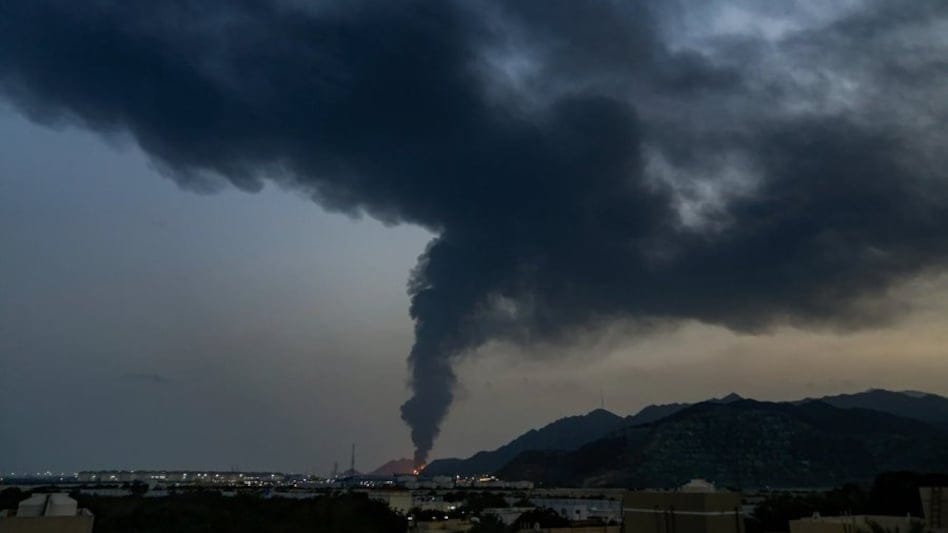
*Runs through dialogue, not escalation.*
Rasheed Ahmad Chughtai
www.rachughtai.com
In times of heightened friction, every action carries a strategic rationale, and every response risks reshaping regional order. The reported hostilities between Iran and the United Arab Emirates do not emerge from a vacuum. They are the product of accumulated provocations, perceived threats to sovereignty, and the dangerous entanglement of external powers in the Gulf’s fragile security architecture. This analysis does not seek to verify operational claims, nor to assign unilateral blame. Rather, it aims to dissect the stated justifications, the cascade of condemnations, and the painstaking diplomatic efforts—from Beijing to Islamabad—to prevent a spiral. What follows is an examination of a crisis that tests not only the endurance of Gulf stability but also the very principle that guided nations for decades: that no matter the provocation, the path to lasting security runs through dialogue, not escalation.
As tensions flare between Iran and the UAE, the world watches a familiar script unfold—but with new players and higher stakes.
The recent spike in Gulf hostilities has left analysts scrambling for answers. Why would Iran reportedly target the UAE now? And what’s really happening behind the conflicting narratives?
The Spark: What’s Being Reported
Without the ability to independently verify attack claims, we can only examine the justifications emerging from cited sources.
US-Israeli Provocation: Multiple outlets report that tensions trace back to a joint US-Israeli military strike on Iran on February 28, 2026. Tehran claims any action against the UAE is retaliation for Washington and Abu Dhabi allegedly allowing their territories to be used against Iranian interests.
The ‘Project Freedom’ Flashpoint: An unverified narrative suggests President Trump launched “Project Freedom” on May 4—a naval operation to force open the Strait of Hormuz. Iran has labeled this “military adventurism.”
Iran’s Official Denial: Adding a confusing layer, Iranian state media officially denies any plan to target the UAE, instead blaming the US for provoking a security incident near Fujairah.
Regional Reactions: Condemnation and Complexity
According to circulating online narratives, several Arab states and bodies have condemned the reported attacks. Saudi Crown Prince Mohammed bin Salman reportedly called them “unjustified,” while both the League of Arab States and the GCC issued strong condemnations.
Was it a mistake or calculated strategy? Some sources label it “unjustified aggression,” while others frame it as deliberate retaliation for perceived US-Israeli provocation. Most analysts agree such an action would represent a strategic—and highly escalatory—risk.
*Where Major Powers Stand*
The United States and the Gulf: The UAE reportedly hosts about 5,000 US military personnel at Al Dhafra Air Base. Yet US officials have allegedly told Iran they won’t allow their territory to be used for “hostile military actions” against Tehran. This contradiction—a US naval blockade of Iranian shipping alongside a continued military footprint—puts Gulf states in an impossible position.
China’s Shuttle Diplomacy: Beijing appears actively engaged, with President Xi recently meeting the Abu Dhabi Crown Prince to promote what he calls a “common, comprehensive, cooperative, and sustainable” security framework. China emphasizes there is no military solution.
Russia’s Balancing Act: Moscow maintains ties with all parties, sharing security assessments while staying in contact on freedom of navigation and nuclear issues.
Pakistan’s Delicate Mediation
Pakistan has positioned itself as a pivotal—if precarious—mediator. The country reportedly secured an initial ceasefire on April 8, but later talks in Islamabad failed to produce a lasting agreement.
The balancing act between Gulf allies and volatile neighbor Iran has grown more difficult. The Financial Times reports the UAE withdrew some support for Islamabad and demanded repayment of a $3.5 billion loan.
The Path Forward: Can De-escalation Work?
Experts point to several potential off-ramps:
For Iran: Diplomacy and avoiding further provocation are essential. Agreeing to a verifiable nuclear program freeze and committing to freedom of navigation in the Strait would address core concerns. Tehran currently states there is “no military solution to a political crisis.”
The Need for a US-Iran Deal: A peace agreement with Washington is widely seen as essential for Iran to lift crippling sanctions and rebuild its economy.
Diplomacy First: All sources agree on one point—diplomacy is essential. Recent months have seen high-level calls between Emirati and Iranian officials. The challenge now is moving from sporadic contact to sustained, multilateral negotiation.
The coming weeks will test whether regional powers can step back from the brink—or whether the Gulf is headed toward yet another costly confrontation.
Rasheed Ahmad Chughtai
www.rachughtai.com