
London’s Blind Spot?
Facts & Realities
Why Pakistan’s Civilian Casualties Demand a Reckoning
A Nation Under Fire, A World That Looks Away
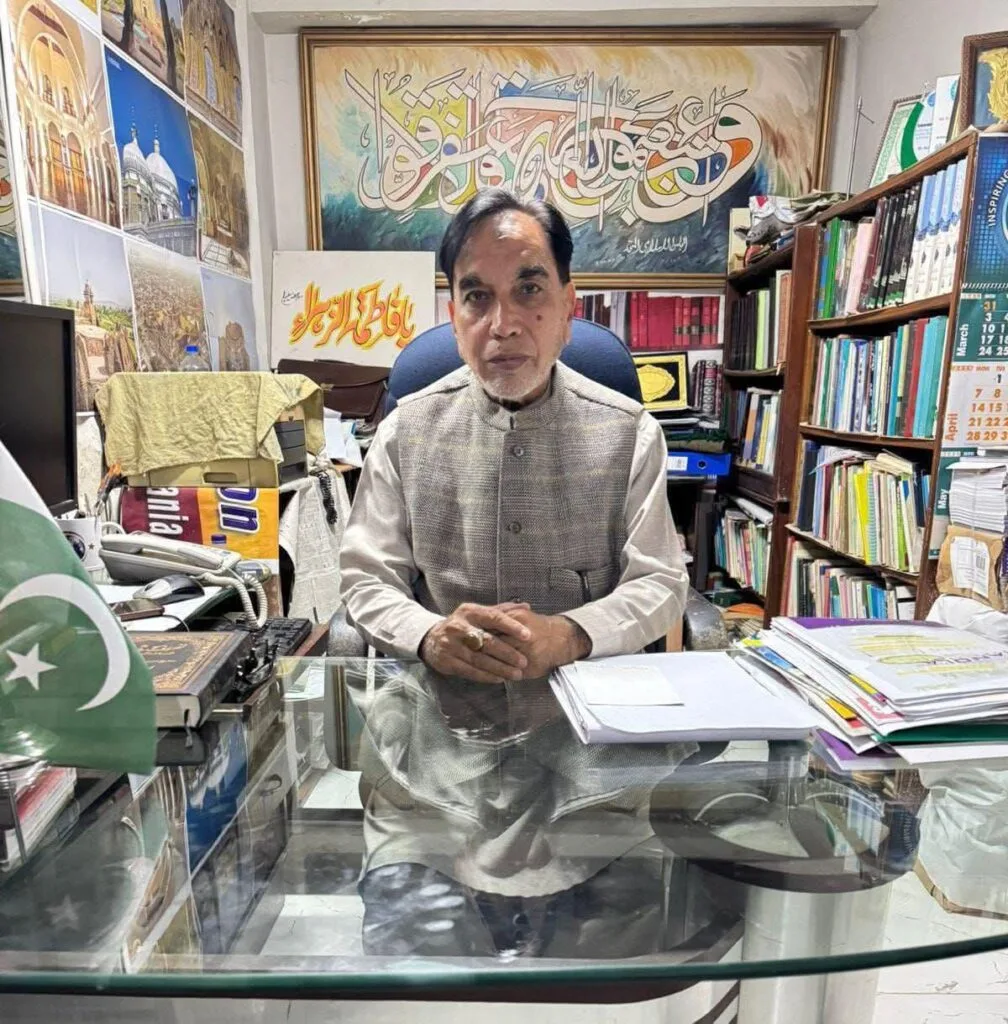
Rasheed Ahmad Chughtai
Email
thepageintl.pk@gmail.com
For decades, Pakistan has stood as the front-line bulwark against global terrorism — sacrificing over 80,000 citizens, billions in economic losses, and the blood of its sons and daughters. Yet, when Pakistani civilians are slaughtered by cross-border shelling launched from Afghan soil, the world’s response is a deafening silence punctuated by lectures on “restraint.”
Pakistan is not the aggressor. Pakistan does not shelter terror groups that plot against its neighbors. And Pakistan does not fire mortars at children playing cricket or women fetching water. The Afghan Taliban regime does. Since March 26, 2026, alone, 52 innocent Pakistanis — including mothers, infants, and elderly villagers — have been martyred. Eighty-four more lie wounded, some permanently disabled, by unprovoked attacks from across the Durand Line.
Where are the emergency UN sessions? Where are the condemnations from Western capitals? Where are the headlines mourning Pakistani lives? Instead, Islamabad receives sanctimonious rebukes from a British envoy who sees only Afghan casualties — as if Pakistani blood is cheaper, Pakistani grief less valid, Pakistani sovereignty a footnote.
This is not diplomacy. This is double standards. Pakistan rejects this moral asymmetry with every fiber of its being. The nation will not apologize for defending its borders, its citizens, or its dignity. And the world must finally listen: The root cause of this catastrophe is not Pakistan’s response — it is the Taliban’s safe havens for the TTP. Until those are dismantled, every civilian death on both sides of the border rests squarely on Kabul’s shoulders.
Let the facts, and Pakistan’s righteous demand for justice, be heard clearly.
The Diplomatic Row
A diplomatic firestorm erupted over the weekend after Islamabad fiercely rebuked Britain’s special envoy for Afghanistan, Richard Lindsay, accusing him of issuing “one-sided” remarks that ignore the grim reality of cross-border terror spilling onto Pakistani soil. The confrontation has thrust the Afghanistan-Pakistan border crisis back into the international spotlight, exposing deep divisions between Western diplomatic narratives and Islamabad’s national security concerns.
The Diplomatic Row
The friction began on May 1, when Richard Lindsay shared a report from the UN Assistance Mission in Afghanistan (UNAMA) on social media platform X. The post documented “tens of civilians killed or injured” in strikes in eastern Kunar province, including near a university in Asadabad. Lindsay expressed concern over “further violence along the Afghanistan-Pakistan border,” explicitly citing strikes in Kunar, and called on both sides to protect civilians and avoid further escalation.
Pakistan’s Foreign Office responded swiftly. Spokesperson Tahir Andrabi stated that the British envoy’s remarks were “devoid of a deeper understanding of the situation along the border”, emphasizing that the “one-sided remarks” ignore the root cause of terrorism — specifically, Pakistan’s repeated accusations that the Afghan Taliban regime allows its territory to be used as a launchpad for attacks into Pakistan.
Since a temporary pause announced in March 2026, cross-border aggression from the Afghan side has continued unabated, Andrabi added. Since that pause, indiscriminate and unprovoked attacks by the Afghan Taliban, and terrorist activities by Afghan Taliban-supported Indian proxies inside Pakistan, have resulted in the martyrdom of 52 civilians and 84 injuries. Afghan claims of civilian casualties from Pakistan’s responses, he said, “lack evidential credibility”.
Separating Fact from Propaganda: The Human Toll
Pakistan’s Narrative
On the ground, the losses are tangible. The district administration in Bajaur, Khyber Pakhtunkhwa, has documented at least nine civilians killed including three women, five boys, and one girl, with 12 others wounded from cross-border fire between March and April 2026. Officials stated that mortar shells were fired from across the border into Mamund, Salarzai, and several other areas of Bajaur, causing widespread fear among civilian populations. Homes were destroyed, families mourned, and communities were displaced — yet international bodies remained largely silent on the Pakistani casualties.
The UN Perspective
However, the broader context is more complex. According to UNAMA’s latest report (March 2026), cross-border clashes have inflicted heavy casualties on both sides, but the scale of Afghan civilian harm is significantly higher. The UN verified and recorded 185 civilian casualties in Afghanistan between Feb 26 and Mar 5, 2026 — 56 killed and 129 injured — due to indirect fire and aerial attacks. Notably, 55% of these casualties were women and children.
In one incident on Feb 27, airstrikes in Paktika province killed 14 civilians including four women, two girls, five boys, and three men. The situation in October 2025 was even more severe: UNAMA documented 70 civilians killed and 478 injured in Afghanistan during the final three months of 2025, with most of the harm attributed to Pakistani operations. On Oct 15 alone, 457 civilian casualties (35 killed, 422 injured) occurred, nearly 90% in Spin Boldak district of Kandahar province, where sustained exchanges of heavy weapons and subsequent aerial attacks destroyed homes and killed entire families. The youngest victim was just three months old.
Whose Lives Count?
The competing data points reveal a tragedy of competing narratives. While Pakistan emphasizes 52 civilians killed on its side since March, UNAMA data suggests Afghan civilian casualties have been substantially higher — approximately 70 in late 2025 alone. Both sides accuse the other of deliberately targeting civilians, but independent verification remains nearly impossible due to restricted access to border regions. What is undeniable is that civilians on both sides are bearing the brunt of a conflict neither government appears capable of controlling.
TTP Safe Havens and the Root Cause
At the heart of Islamabad’s frustration lies the Tehrik-i-Taliban Pakistan (TTP) — a group Pakistan has designated as “Fitna al-Khwarij” (outcasts of Islam). Pakistan has long maintained that the TTP operates from safe havens inside Afghanistan, with the Afghan Taliban providing sanctuary, facilitation, and logistical support. At the UN Security Council in February 2026, Pakistan demanded an end to terror safe havens in Afghanistan, noting that a UN report indicated the TTP had resurged following the Taliban’s 2021 takeover.
Evidence of these sanctuaries continues to mount. An Afghan newspaper reported in February 2026 that Ghazni province has become a hub for banned militant groups, including the TTP, with specialized residential complexes and secure hideouts constructed to support their operations. Pakistan has documented over 600 TTP attacks launched from Afghan soil, with cross-border infiltration attempts continuing despite a temporary ceasefire.
Just days before Lindsay’s post, Pakistani security forces killed 13 terrorists while foiling two separate infiltration attempts along the border in Khyber Pakhtunkhwa — eight in Mohmand district and five in North Waziristan. The Inter-Services Public Relations (ISPR) stated that these terrorists belonged to “Indian-sponsored” TTP attempting to cross into Pakistan, underscoring Islamabad’s stance regarding the Afghan Taliban regime’s failure to ensure effective border management.
The Afghan Taliban, for their part, deny supporting the TTP and instead accuse Pakistan of carrying out strikes on civilian areas in Kunar and other provinces. Senior Taliban official Abdul Wasi, during talks with Lindsay, condemned Pakistani strikes on civilian areas, including homes and educational institutions, and stressed the need for restraint.
A Root Cause That Won’t Be Addressed
The TTP safe haven issue is not merely a talking point — it is the primary driver of Pakistan’s military posture along the border. Since the Taliban’s return to power in August 2021, Pakistan has faced a sharp escalation in threats from the TTP, with the group conducting increasingly sophisticated cross-border attacks. The Taliban’s refusal to crack down on these elements — despite explicit commitments under the Doha Agreement — has led Islamabad to conclude that dialogue alone is insufficient. Until the international community pressures Kabul to dismantle these sanctuaries, cross-border violence will continue to claim civilian lives on both sides.
Operation Ghazab lil-Haq and the Ceasefire Collapse
Pakistan’s military response, codenamed Operation Ghazab lil-Haq (Wrath Against the Truth), was launched on the night of Feb 26, 2026, following what Islamabad described as unprovoked cross-border attacks by the Afghan Taliban. At the request of several “brotherly Islamic countries,” Pakistan announced a temporary pause on March 18 ahead of Eid al-Fitr. However, after repeated violations, the operation was resumed on March 26, with Islamabad vowing to continue “until its objectives are achieved”.
Since then, the violence has only intensified. On May 2, Information Minister Attaullah Tarar accused Afghan border forces of deliberately targeting civilians, stating that at least nine people were killed and 15 injured over two days in Bajaur district. He added that three civilians were injured while playing cricket by a quadcopter attack. Tarar described the Afghan Taliban’s targeting of civilians as “unacceptable, insidious and reflective of their barbaric nature towards human life”.
Diplomatic efforts to de-escalate have yielded little. In April 2026, Islamabad and Kabul held talks in Urumqi, China, where the Afghan Taliban regime agreed to avoid further escalation . Despite this pledge, Kabul has continued cross-border attacks against civilians.
A Cycle of Violence With No Exit
The collapse of the March ceasefire reveals a fundamental breakdown in communication — and trust — between the two neighbors. Pakistan accuses the Taliban of using pauses to regroup and attack; the Taliban accuses Pakistan of responding with disproportionate force. Neither side appears willing to make the first concession. The result is a grinding, bloody stalemate that has already claimed hundreds of civilian lives and displaced thousands more. Without a credible third-party mediator — or genuine political will on both sides — further escalation appears almost inevitable.
The Media Battlefield: Al Jazeera Under Scrutiny
Amid the military clashes, a parallel information war is unfolding. Reports have emerged suggesting that Pakistan’s military has directed local media to challenge what it calls Qatar’s “dubious diplomatic neutrality” regarding Afghanistan, specifically targeting Al Jazeera, the Qatar-based media network. The leaked instructions reportedly advised Pakistani media houses not to portray the Afghan Taliban regime as a “perfect or stabilising force” and to aggressively push back against narratives seen as undermining Pakistan’s position.
Critics have long accused Al Jazeera of pro-Taliban bias. An analysis published in The Kabul Tribune noted a pattern of “cautious, arguably deferential coverage of the Afghan Taliban by Al Jazeera Media Network,” revealing “a pronounced tilt that minimizes direct criticism of the Taliban government while framing regional tensions largely through the lens of historical grievance against Pakistan”. The analysis pointed to an Al Jazeera Arabic talk show that attempted to provide a historical overview but made several historically inaccurate assertions, including the claim that “Pakistan created and supported the Afghan Taliban, expecting them to be a friendly, subordinate government” — an assertion that critics say ignores the organic emergence of the Taliban movement.
More pointedly, the network has been accused of selective reporting on TTP attacks. While Al Jazeera reports diligently cover damage and casualties from TTP-claimed attacks in Pakistan, there is a consistent omission of reporting on successful Pakistani military counter-operations against the TTP — creating a narrative of unopposed aggression. A report from Daily Pakistan in early May 2026 highlighted: “Al Jazeera filed no report” on the nine civilian deaths in Bajaur, suggesting that “Pakistani lives only count when the story fits”.
However, the issue is not entirely one-sided. An academic study on Al Jazeera’s coverage of the Taliban found the network’s reporting to be “multidimensional,” underscoring governance shortcomings alongside civilian agency, and noting the challenges of reporting for media in authoritarian contexts. The network has previously denied any institutional bias and maintains that it operates independently.
Information Warfare and Double Standards
The controversy over Al Jazeera’s coverage reflects a broader problem in how international media covers the Afghanistan-Pakistan conflict. Western media outlets, often reliant on access to Taliban officials for reporting inside Afghanistan, have a structural incentive to avoid antagonizing their sources — leading to a pattern of coverage that, while not necessarily “pro-Taliban,” tends to downplay Taliban atrocities while amplifying Afghan grievances against Pakistan. Pakistani lives lost to cross-border fire rarely make international headlines, while Afghan civilian casualties — many of which are indeed tragic — receive significantly more attention. This imbalance fuels resentment in Islamabad and complicates efforts to build international consensus on the TTP safe haven issue. As one commentator put it: “This is how impunity gets manufactured — not through grand conspiracies but through hundreds of small editorial decisions that collectively tell a terrorist organization that its violence will not be documented, will not be reported, will not be remembered”.
The Pakistan-UK diplomatic spat over Richard Lindsay’s remarks is more than a routine diplomatic exchange. It encapsulates the fundamental disconnect between Western diplomatic framing — which tends to emphasize restraint and balanced reporting of casualties — and Pakistan’s urgent security calculus, which prioritizes the elimination of TTP safe havens on Afghan soil.
The 52 civilians martyred on Pakistani soil since late March are not a statistic; they are a daily reality for communities along the Durand Line, who live under the constant threat of cross-border shelling and terrorist infiltration. Yet the TTP’s sanctuaries inside Afghanistan remain largely intact, and Pakistani pleas for international action continue to be met with calls for “dialogue and restraint.”
Meanwhile, UNAMA data reveals a darker and more complex picture: over 70 Afghan civilians killed in late 2025 alone, predominantly by Pakistani forces. The UN’s own analysis notes that 55% of casualties on the Afghan side are women and children. This is not a narrative contest to be “won” by either side — it is a humanitarian catastrophe unfolding in real time, with children on both sides paying the price for a conflict their leaders cannot resolve.
The response from international bodies remains muted. The UN issued no separate statement on the Bajaur killings. Al Jazeera filed no report on the nine civilians (including three women and six children) killed along the border. In a conflict where narrative warfare has become as deadly as kinetic combat, the absence of balanced, consistent coverage from influential international platforms has consequences beyond mere journalism.
For Pakistan, the calculation is becoming increasingly stark: If the international community will not pressure the Taliban to dismantle TTP safe havens, and if diplomatic channels produce only temporary ceasefires followed by renewed violence, then unilateral military action — regardless of the diplomatic or humanitarian blowback — may appear to Islamabad as the only remaining option.
And for the civilians on both sides of the border, trapped between a Taliban regime unwilling to crack down on terror networks and a Pakistani state increasingly unwilling to tolerate their presence, the future looks bleak. Until the root cause — the safe havens — is addressed, the cycle of violence will continue to claim innocent lives. Western envoys, no matter how well-intentioned, cannot simply urge dialogue while ignoring the fundamental reason the talks are failing.
Rasheed Ahmad Chughtai
www.rachughtai.com