
Eid ul-Adha Mubarak: A Message of Sacrifice, Faith, Unity & Humanity

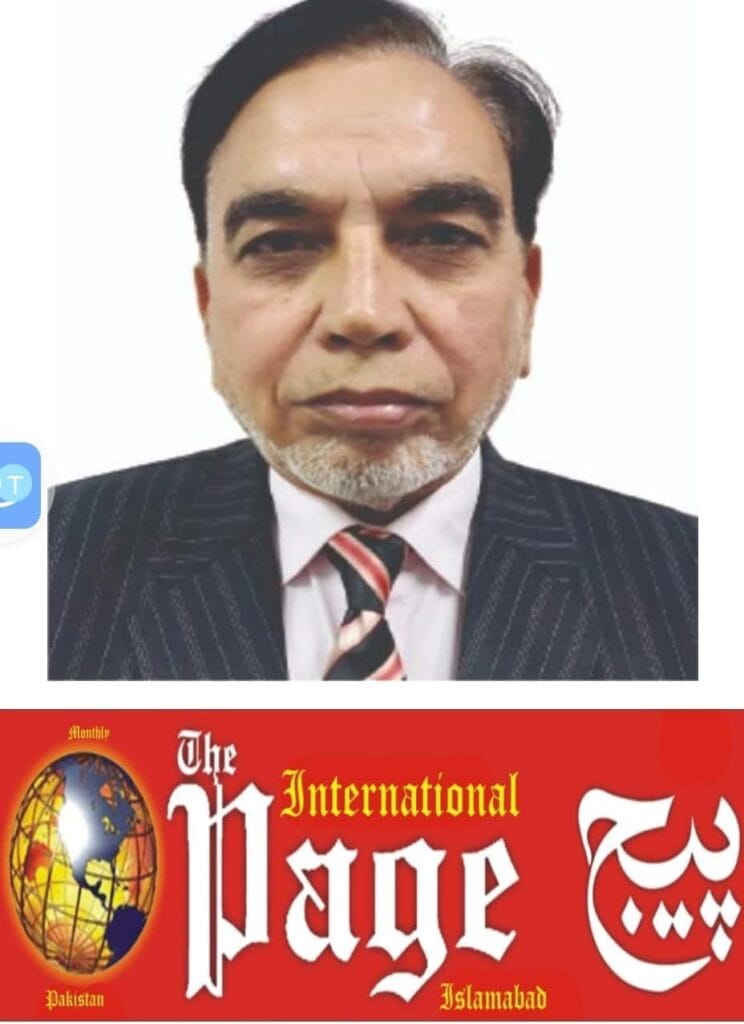
By Rasheed Ahmad Chughtai
Eid ul-Adha Mubarak to all Muslims around the world. May Allah Almighty accept our prayers, sacrifices, Hajj, charity, and good deeds. May this blessed Eid bring peace, mercy, unity, dignity, prosperity, and spiritual awakening to the entire Muslim Ummah and to humanity.
Introduction: The Timeless Message of Eid ul-Adha
Eid ul-Adha, the “Festival of Sacrifice,” is the second of the two main festivals in Islam and commemorates the unwavering faith and profound obedience of Prophet Ibrahim (AS) and Prophet Ismail (AS) to the command of Allah (SWT). In 2025, Muslims worldwide are celebrating this sacred occasion on June 6th or 7th, depending on the moon sighting.
This blessed day is not merely a festival of sacrifice; it is a divine message of obedience, submission, patience, sincerity, and complete trust in Allah Almighty. It reminds us of the unparalleled sacrifice of Prophet Ibrahim (AS) and Prophet Ismail (AS), who submitted themselves completely to the command of Allah.
Islamic Teachings: The Foundation of Sacrifice
Allah Almighty says in the Holy Quran:
“And when they had both submitted themselves (to Allah), and he had laid him prostrate on his forehead, We called out to him: O Ibrahim! You have fulfilled the vision.” (Surah As-Saffat 37:103-105)
The Holy Quran further says:
“Indeed, this was a clear trial. And We ransomed him with a عظیم sacrifice (Zibh-e-Azeem).” (Surah As-Saffat 37:106-107)
The Holy Prophet (PBUH) emphasized the immense virtue of this act, saying: “The son of Adam does no action on the Day of Sacrifice more beloved to Allah than shedding sacrificial blood.” (Sunan al-Tirmidhi)
Understanding “Zibh-e-Azeem” (The Great Sacrifice)
What is “Zibh-e-Azeem”? This term from Surah As-Saffat (37:107) holds profound layers of meaning. Many Islamic scholars explain that this event not only commemorates the sacrifice of a ram sent by Allah in place of Prophet Ismail (AS) but also symbolizes the continuation of truth, sacrifice, and resistance against oppression throughout Islamic history.
This “greatness” cannot be fully captured by an ordinary ram, as it must be great in absolute degree. Scholars from both Sunni and Shia schools of thought reflect on this concept in profound ways.
· Sunni Perspective: While the ram was the immediate ransom, many Sunni scholars, such as Shah Wali-ullah, view this verse as pointing to an even greater sacrifice that would be offered by the Ummah of Prophet Muhammad (PBUH). This understanding opens the door to see the ultimate embodiment of submission to Allah in Imam Hussain (AS)‘s stand at Karbala, where the purpose of the trial—to demonstrate complete devotion and surrender—was demonstrated in a greater style.
· Shia Perspective: According to narrations from the Ahl al-Bayt (AS), the real meaning of “Zibh-e-Azeem” refers to Imam Hussain (AS) himself. He is seen as the ultimate manifestation of the great sacrifice, the one who reached perfection on the day of Ashura. As Allama Iqbal beautifully bound the two sacrifices together: “The tale of the sanctuary is simple, humble, yet full of colour; Its climax is Hussain (A.S.), its beginning is Ismail (A.S.).”
Thus, “Zibh-e-Azeem” bridges the trial of Ibrahim (AS) and Ismail (AS) with the martyrdom of Imam Hussain (AS) at Karbala, uniting the spirit of surrender across generations.
Imam Hussain (AS): The Embodiment of the Great Sacrifice
The Battle of Karbala, where Imam Hussain (AS) and his small group of 72 loyal companions were martyred, is the most powerful historical manifestation of “Zibh-e-Azeem”. In 680 CE on the plains of Karbala, Imam Hussain (AS) faced the tyrannical army of Yazid. He famously declared his mission: “I did not rise out of arrogance, nor for corruption or oppression. I rose to seek reform in the nation of my grandfather. I want to enjoin good and forbid evil…” (Bihar al-Anwar, Vol. 44, p. 329).
The night before the battle, Imam Hussain (AS) gave a final, moving sermon to his remaining companions, releasing them from all obligations and urging them to use the darkness of the night to save themselves. He even asked his brother Abbas to put out the lamp so that people would not be ashamed of being seen leaving. Yet, his loyal 72 companions chose to stay, willing to sacrifice everything for the truth.
The Plight of the Muslim Ummah: A Call to Action
As we celebrate Eid, we are reminded that the true spirit of sacrifice today calls on the Muslim Ummah to awaken from its slumber. The year 2025 has dawned with the Muslim Ummah facing continued turmoil. The Ummah is besieged, with Palestine, Kashmir, and other regions serving as active theatres of suffering, where Muslims are being dehumanized. Over 50,000 Palestinians have been slaughtered, and over 900 people were massacred after a fragile ceasefire collapsed.
Tragically, there has been no unified Muslim response, with hollow statements replacing collective action. This has led to what some call the “Civilizational Siege of the Muslim Ummah,” where we face not just political assault but a coordinated ideological onslaught against Islamic identity. The question remains: When will the Ummah live up to the standard of sacrifice set by Ibrahim (AS), Ismail (AS), and Imam Hussain (AS)?
Interfaith Harmony During Eid: A Shared Humanity
Eid is not just a Muslim festival; it offers a vital platform for interfaith engagement, mutual respect, and shared humanity. The core values of sacrifice, selflessness, compassion, and generosity are universal and resonate with the teachings of many faiths.
In Nigeria, interfaith families celebrate Eid together, with non-Muslim relatives helping with decorations, preparing the home, and learning basic greetings. Across the globe, Muslims are encouraged to share this festival with neighbors of other faiths. The simple act of saying “Eid Mubarak” to a colleague or inviting a neighbor for a festive meal can build bridges and foster understanding. The Prophet Muhammad (PBUH) beautifully encapsulated this inclusive spirit: “You are not a believer until you love for your brother what you love for yourself” (Sahih al-Bukhari), with scholars explaining that “brother” includes people of all faiths.
The Abraham Accord: A Political Reality
The Abraham Accords, brokered by the US in 2020 to normalize relations between Israel and several Arab nations, represent a significant and controversial shift in Middle Eastern geopolitics. The accords have survived five years and the recent Gaza war, but they remain fragile.
The situation remains highly complex. While no signatory has cut relations with Israel, Arab public outrage over Gaza has widened the gap between political elites and their populations. The Gulf nations, including Saudi Arabia, Qatar, and the UAE, have warned that Israel’s actions in the West Bank cross a “red line” and could jeopardize the agreements. Conversely, Western powers continue to push for expansion, with the Trump administration touting Kazakhstan’s formal accession as recently as November 2025. The future of these accords remains uncertain, serving as a reminder of the political fault lines within the Ummah.
Practical Guidance for a Blessed Eid
· The Ritual of Qurbani: The sacrifice is symbolic of our willingness to give up what is dear to us for Allah’s pleasure. The meat is distributed in three equal parts: one for the family, one for relatives and friends, and one for the poor and needy.
· Charity and Generosity: Acts of charity are greatly emphasized. Donating to food banks, supporting orphans, and helping the less fortunate are all ways to earn immense rewards.
· Extending Kindness: Share the joy of Eid with non-Muslim neighbors and colleagues. Send a thoughtful greeting, share a meal, or simply offer a kind word.
Prayers for the Ummah
As we stand in prayer on this blessed day, let us raise our hands to Allah with these heartfelt supplications:
· O Allah! Grant unity, peace, love, and brotherhood to the Muslim Ummah.
· O Allah! Protect the oppressed Muslims in Palestine, Gaza, Kashmir, Yemen, Syria, and everywhere.
· O Allah! Grant us good health, honor, halal sustenance, complete faith, and a righteous life.
· O Allah! Accept our sacrifices, prayers, and good deeds.
· O Allah! Remove hatred, arrogance, envy, and division from our hearts.
· O Allah! Grant us the ability to follow the teachings of the Quran, the Ahl al-Bayt (AS), and the Companions (RA).
رَبَّنَا تَقَبَّلْ مِنَّا إِنَّكَ أَنْتَ السَّمِيعُ الْعَلِيمُ
“Our Lord, accept from us. Indeed, You are the All-Hearing, the All-Knowing.” (Quran 2:127)
اللَّهُمَّ صَلِّ عَلَىٰ مُحَمَّدٍ وَآلِ مُحَمَّدٍ كَمَا صَلَّيْتَ عَلَىٰ إِبْرَاهِيمَ وَآلِ إِبْرَاهِيمَ إِنَّكَ حَمِيدٌ مَجِيدٌ
Eid ul-Adha is a celebration of faith, a call to sacrifice, and a powerful reminder of our shared humanity. By reflecting on the trials of Prophet Ibrahim (AS), the ultimate sacrifice of Imam Hussain (AS), and the plight of our brothers and sisters today, we can transform this Eid from a mere ritual into a catalyst for personal and collective change.
Eid ul-Adha Mubarak! May peace, humanity, unity, and prosperity prevail.
With prayers,
Rasheed Ahmad Chughtai
رشید احمد چغتائی
www.rachughtai.com