
From Nuclear Fear to Economic Nightmare: Why a Sanctions-Free Iran Terrifies Its Rivals
By
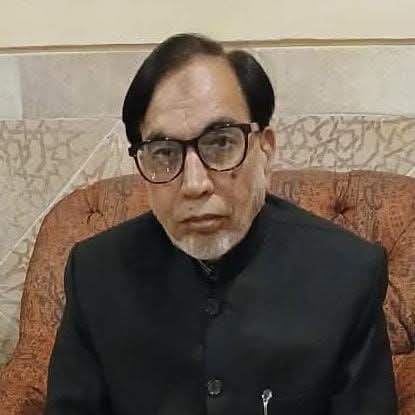
Rasheed Ahmad Chughtai
For years, Western policymakers and media outlets have framed the standoff with Iran as a single-minded pursuit: preventing Tehran from acquiring a nuclear weapon. The Islamic Republic’s atomic ambitions, we are told, represent the primary existential threat to Israel and its Gulf Arab allies.
This is a dangerous miscalculation. Beneath the surface of headlines about centrifuges and uranium enrichment lies a far deeper, more profound fear that haunts the strategic planners in Tel Aviv, Riyadh, and Abu Dhabi. The true nightmare for Israel and its Gulf partners is not a nuclear-armed Iran, but a prosperous, stable, and internationally integrated Iran — a nation unleashed from the shackles of crippling economic sanctions and allowed to reclaim its historic role as the uncontested superpower of the Middle East.
A sanctions-free Iran would be an economic and technological juggernaut, leveraging a combination of natural and human capital that no other regional rival can match. The nuclear threat, by contrast, is a containable problem. The threat of a flourishing Iran is a direct challenge to their very model of existence.
A Colossus of Natural Wealth
The most immediate source of Iran’s latent power lies beneath its soil. The country sits on the world’s second-largest natural gas reserves (approximately 33.8 trillion cubic meters) and holds the world’s third-largest proven oil reserves, with an estimated 209 billion barrels as of 2024. This energy wealth is staggering, but it is only the beginning.
Iran’s mineral wealth is among the most diverse on the planet, with 68 types of minerals currently identified. It possesses an estimated 2.7 billion tons of iron ore reserves and 2.6 billion tons of copper reserves, accounting for nearly 5% of the world’s known copper deposits. Furthermore, Iran holds approximately 11 million tons of zinc, representing four percent of the total global reserves, and boasts significant deposits of lead, gypsum, barite, and manganese. The total confirmed mineral reserves, excluding oil and gas, are estimated at 37 billion tons, with a potential value of nearly $770 billion. This is the bedrock of a truly diversified industrial power.
Ingenuity Forged in Isolation
Perhaps the most remarkable testament to Iranian capability is its ability to innovate under pressure. For decades, crippling U.S.-led sanctions have sought to isolate Iran economically, but they have inadvertently fostered a culture of self-reliance and ingenuity that rivals the best in the world. The Iranian defense industry has become entirely self-sufficient, producing everything from advanced air defense systems and combat drones to cutting-edge electronic warfare and cyber equipment. In a testament to the sophistication of this sector, Iran has reportedly increased its exports of defense products by four to five times in recent years.
This indigenous spirit extends far beyond the military. Iran’s knowledge-based economy is a burgeoning force, with knowledge-based firms now accounting for an estimated $11 billion of the nation’s economic output, a figure that is projected to grow to 7% of the GDP by 2028. The nation has ascended a remarkable 60 places in the global knowledge-based economy rankings over just five years. From developing satellite launch vehicles to achieving world-class status in nanotechnology and stem cell research, Iran has demonstrated an unwavering devotion to scientific advancement despite decades of international restrictions.
The Nation’s Ultimate Strategic Asset: Its People
Beyond its resources, Iran’s greatest asset is its human capital. With a population exceeding 91 million, nearly 70% of whom are of working age, Iran possesses the largest and most sophisticated human capital base in the Middle East. This is a young, driven, and technically proficient society that serves as the foundation for a modern, knowledge-based economy.
The numbers are staggering. Iran ranks among the top five nations globally in the number of engineering graduates it produces annually, with over 200,000 engineers graduating each year—more than France, Germany, or Japan. Iranian scientists are also global leaders in research, ranking first among all Islamic nations in scientific citations in 2023, and 14th in the entire world. In the cutting-edge field of nanotechnology, Iran now ranks fifth in the world in terms of scientific output, a dramatic leap from 58th place just a few years ago. This is not the profile of a failing state; it is the profile of a nation on the cusp of a major scientific and industrial revolution.
An Agricultural Powerhouse
The original analysis captured a key element of Iran’s multifaceted strength when it cited a South Korean diplomat’s wife, who marveled that Iran is an “agricultural paradise.” This is no exaggeration. Iran’s remarkably diverse climate allows it to be a world leader in a host of high-value agricultural products. The country is consistently the world’s largest producer of saffron and caviar, and one of the top producers of pistachios, with an annual output of 200,000 to 310,000 tons. It is also a leading producer of dates, raisins, and a vast array of fresh fruits and vegetables. This agricultural prowess ensures a degree of food security and export diversity that most of its hydrocarbon-dependent rivals can only dream of.
Intelligence, Wisdom, and a Long-Term Vision
Critics often underestimate the strategic wisdom and resilience of the Iranian state. For over four decades, Iran has weathered the most severe sanctions regime ever imposed, turning isolation into a catalyst for domestic innovation. Its strategy is not one of desperation, but of endurance: a calculated policy to absorb economic pain while eroding the political will of its adversaries. The Islamic Republic has demonstrated a long-term commitment to its development, viewing economic and scientific progress not just as a goal, but as a matter of national sovereignty and security. The nation’s devotion to the rule of law and its commitment to developing its own capabilities, as enshrined in its revolutionary ideology, have created a resilient political and social fabric that has confounded foreign predictions of its collapse.
The Ultimate Fear: A Successful Iran
This, then, is the reality that truly unnerves Israel and its Gulf allies. A nuclear weapon is a powerful, but one-dimensional, deterrent. A prosperous, healthy, and internationally integrated Iran would be an existential competitor on every conceivable level: economic, technological, diplomatic, and ideological.
For the petro-monarchies of the Gulf, whose vast wealth is built on narrow, foreign-dependent economic models and often outsourced security, a thriving Iran exposes their own fragility. A sanctions-free Iran would directly challenge the economic dominance of Saudi Arabia and the UAE, offering a compelling alternative model of development grounded in indigenous human capital and a diversified industrial base.
This explains why powerful forces, including the influential pro-Israel lobby in the United States, have consistently worked to maintain the economic embargo. The goal has never been merely to prevent a nuclear Iran. It has always been to prevent a successful Iran. The nuclear threat is a manageable scenario, one that can be contained through deterrence and diplomacy. The threat of a united, prosperous, and powerful Iran is a strategic nightmare—one that its rivals will go to any and all lengths to prevent. The true prize in this decades-long struggle is not the bomb. It is the future of the Middle East itself.
Rasheed Ahmad Chughtai