
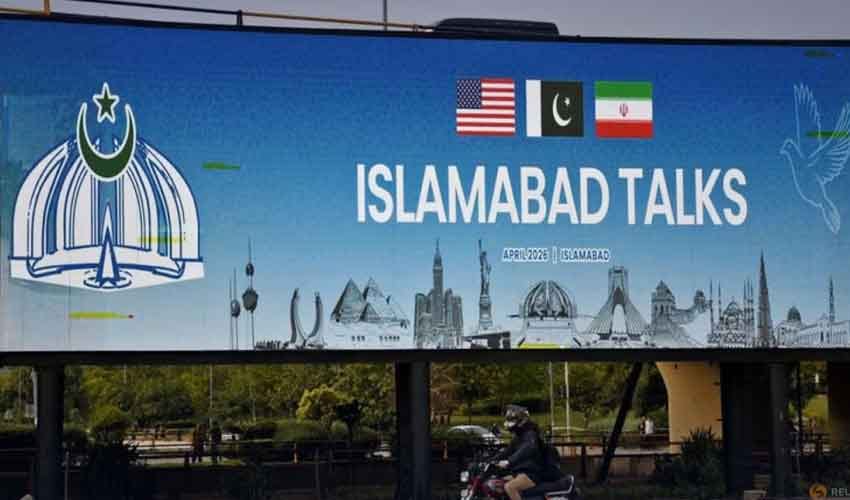
From the Charter of Medina to the Islamabad Talks, Negotiations – Deal. (Model The Islamic Imperative for Peace, Dialogue, and Justice in a Confrontational World

By Rasheed Ahmad Chughtai
Preamble
A Revelation of Peace, A Civilization of Covenant
In the name of Allah, the Most Gracious, the Most Merciful. When humanity stands at the precipice of self-annihilation—where the rhetoric of war drowns out the whispers of reason, and where the powerful mistake aggression for strength—a singular truth emerges from the heart of the Islamic tradition: Peace is not an absence of conflict; it is a presence of justice.
Islam, often tragically mischaracterized by the ignorance of both its enemies and the failures of some of its followers, is fundamentally a Sulh (reconciliation). It is a faith born not of the sword, but of the Qalam (pen) and the covenant. From the very first revelation commanding “Iqra” (Read), Allah elevated dialogue over destruction. The Holy Qur’an does not open with a chapter on war, but with Ar-Rahman (The Most Merciful) and Ar-Rahim (The Most Compassionate). These are not mere names; they are the operating system of the universe.
This article is not a political analysis. It is a spiritual and historical reminder. It traces a golden thread of diplomacy from the sands of Yathrib to the modern chancelleries of Islamabad. We shall revisit the Charter of Medina (622 CE)—the world’s first multicultural constitution; reflect on the strategic patience of the Treaty of Hudaybiyyah (628 CE)—the masterclass in peace as a precursor to victory; and analyze the contemporary Islamabad Talks—where the legacy of these covenants is being tested against the hard realities of statecraft in the 21st century.
In a world torn by the Ukraine-Russia war, the tragic humanitarian catastrophe in Gaza, the nuclear anxieties surrounding Iran, and the great power rivalry between the US and China, the Ummah (global Muslim community) faces a choice: revert to the tribal jahiliyyah (ignorance) of perpetual vendetta, or ascend to the prophetic model of Hudna (truce) and ‘Ahd (covenant). This article argues that the future of global stability lies not in Western Realpolitik, but in the Islamic jurisprudence of peace.
Part I: The Charter of Medina (622 CE) – The Constitution of Coexistence
When the Prophet Muhammad (PBUH) migrated to Yathrib (renamed Medina), he entered a society bleeding from tribal civil war (the Aws and Khazraj). The genius of Islam was not merely to stop the fighting, but to restructure the society.
In approximately 622 CE, the Prophet drafted the Sahifah, known as the Charter of Medina. This document was revolutionary. For the first time in history, loyalty was not defined by blood, but by faith and citizenship.
Key Provisions of the Charter:
1. One Ummah: It declared that the Muslims of Quraysh, Yathrib, and those who followed them constituted “one Ummah distinct from other people.”
2. Religious Autonomy: Critically, it stated: “To the Jews their religion, and to the Muslims their religion.” This was not tolerance as a concession; it was pluralism as a principle.
3. Collective Defense: All signatories—Muslims, Jews, and pagans—were bound to defend the city of Medina against external aggression.
4. Rule of Law: The Prophet (PBUH) was designated as the ultimate arbiter (Hakam) to resolve disputes, replacing tribal revenge with civil justice.
The Current Lesson: In the face of rising Islamophobia and claims that Muslim-majority nations cannot host minorities, the Charter of Medina stands as a permanent refutation. It is a positive portrait of Islam as a protector of religious diversity, not a suppressor. If modern states from Tehran to Riyadh to Islamabad adhered to this charter, the plight of refugees and minorities across the Middle East would be transformed overnight.
Part II: The Treaty of Hudaybiyyah (628 CE) – Strategic Patience & The Victory of Peace
If the Charter of Medina was the constitution, the Treaty of Hudaybiyyah is the methodology. In 628 CE, the Prophet marched with 1,400 unarmed followers to perform Umrah. They were stopped at Hudaybiyyah by the Quraysh of Mecca. What followed was a diplomatic masterstroke.
The resulting treaty appeared humiliating to many Muslims at first:
· They could not enter Mecca that year.
· Any Muslim who fled Mecca to Medina had to be returned.
· Tribes could ally with either side.
The “Loss” that Led to Victory:
Surah Al-Fath (Victory) was revealed regarding this treaty: “Indeed, We have granted you a clear victory” (48:1). Why did Allah call a “surrender” a victory?
Because the treaty established recognition. The Quraysh, who had denied Muhammad’s prophethood, now addressed him as the “Messenger of Allah” in the document. Furthermore, the 10-year no-war clause allowed Islam to spread through ideas, not force. Within two years, the Muslim population doubled. The treaty bought the time necessary for a bloodless conquest of Mecca.
The Current Situation & Iran/USA:
This is the most critical lesson for today. As of late 2024 and 2025, the world watches the stalled negotiations between the Islamic Republic of Iran and the United States regarding the JCPOA (Nuclear Deal). Many hardliners on both sides call any negotiation “appeasement” or “surrender.”
The Treaty of Hudaybiyyah teaches the Muslim world that a just truce with an adversary is not a sign of weakness, but a prerequisite for strength. Just as the Prophet (PBUH) negotiated with the polytheists of Mecca (who had persecuted him), modern Islamic Republics can negotiate with global powers without abandoning principles. Peace is the field where seeds of future prosperity are sown.
Part III: The Islamabad Talks – The Contemporary Crucible
Moving from the 7th century to the 21st, we examine the “Islamabad Talks.” While not a single treaty, this refers to the ongoing back-channel and formal diplomatic engagements hosted by Pakistan—the only nuclear-armed Muslim nation—between rival powers, specifically involving the United States, China, the Taliban (Afghanistan), and regional stability.
The Context:
Following the chaotic US withdrawal from Afghanistan in 2021, Islamabad emerged as the pivotal point for negotiations regarding humanitarian aid, counter-terrorism, and trade. Unlike Doha, which was about withdrawal, Islamabad is about reconstruction and security.
The Negotiations and Deal for Peace:
Pakistan, leveraging the legacy of the Medina model, has attempted to broker:
1. The Afghan Stability Pact: Negotiating between the de-facto Taliban authorities and Western powers to unfreeze assets and prevent civil war.
2. The Iran-Saudi Détente: Islamabad played a supporting role in the Chinese-brokered agreement, emphasizing that intra-Ummah conflict (Sunni-Shia) is a violation of the Medina principle of “believers being brothers.”
3. Counter-Terrorism Dialogue: Talks between Pakistan and Tehrik-i-Taliban Pakistan (TTP), though fragile, follow the Islamic principle of Sulh before Qital (fighting).
The Current Situation (2025-2026 Outlook):
As we write today, the “Deal for Peace” faces extreme pressure. The resurgence of cross-border terrorism, the economic fragility of Pakistan, and the political polarization in the region threaten the Hudaybiyyah spirit. However, the fact that talks continue—that enemies are sitting in the same room in Islamabad—is an echo of the Prophet’s sunnah.
Part IV: The Positive Islamic Portrait for Modern Diplomacy
To conclude, the world must abandon the orientalist view that Islam expands only by the sword. The statistics of history refute this: Muslim Spain (Al-Andalus) was a beacon of Jewish-Christian-Muslim coexistence for centuries. The Ottoman Millet system allowed religious communities to govern their own laws.
Three Islamic Principles for Current Global Crises:
1. The Sanctity of the Covenant (Al-Wafa bil ‘Ahd):
The Qur’an is explicit: “Fulfill the covenant; indeed, the covenant is subject to questioning” (17:34). The current crisis in global politics is a crisis of trust. The US withdrawal from the Iran deal, the violation of ceasefire agreements in Gaza, and broken promises in Kashmir all stem from a secular view that treaties are temporary instruments of interest. Islam views a treaty as a sacred rope of Allah. If nations acted with Islamic integrity towards treaties, the world would be safer.
2. Justice as the Precursor to Peace (Al-‘Adl Asas al-Sulh):
The current situation in Palestine is the greatest test. The Islamic model does not call for the destruction of anyone (Qur’an 60:8-9), but it demands the end of occupation (Zulm). Lasting peace (Salam) cannot exist without justice (Adl). The Islamabad Talks and any future Tehran-Washington deal must include clauses of economic justice, not just nuclear limits.
3. Dialogue is an Act of Worship (Al-Hiwar ‘Ibadah):
The Prophet (PBUH) was commanded: “And if they incline to peace, then incline to it” (8:61). In 2026, as the world faces AI-driven warfare and cyber-attacks, the human act of talking is more divine than ever. The “Deal for Peace” is not a sellout; it is a Sunnah.
Conclusion: The World Needs More Medinas
We began with the premise that Islam is a religion of peace. But to be precise: Islam is a religion of active, just, and strategic peace. The Charter of Medina gives us the blueprint for a pluralistic state. The Treaty of Hudaybiyyah gives us the patience for long-term negotiation. The Islamabad Talks give us the current field of action.
The current situation is dire. The fires in Gaza, the tension in the Taiwan Strait, the nuclear saber-rattling—these are the symptoms of a world that has forgotten the covenant. The Muslim Ummah has a duty to lead not with Kalashnikovs, but with Qalam and Covenants.
Let the message from Medina to Islamabad be clear: War is a temporary necessity; Peace is an eternal obligation. When the world learns to negotiate as the Prophet negotiated, only then will we see the dawn of true civilization.
“And Allah invites to the Home of Peace (Dar al-Salam) and guides whom He wills to a straight path” (Qur’an 10:25).