The Unjustifiable Sword
Why Another US Strike on Iran Has No Legal, Moral, or Strategic Ground
And Why the Only Path to Peace Lies Through Dialogue, Not Destruction

Rasheed Ahmad Chughtai
The Clock of War Must Stop – A Pivot to Dialogue, Justice, and the Emerging Hope of a Deal
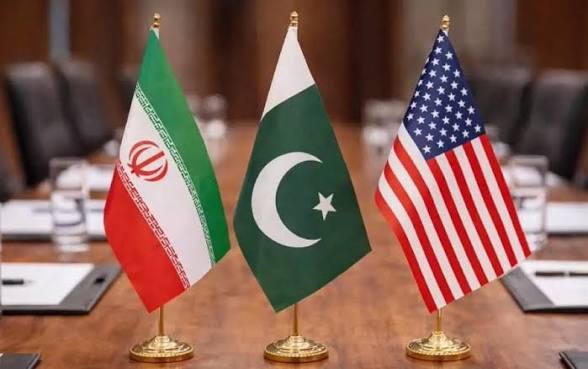
The world stands at a precipice. Another American strike on Iran is not an act of self-defense; it is an act of self-destruction for the entire international order. No legal, moral, or strategic justification exists for such a folly. Iran’s position—rooted in treaty rights, verified compliance, and a demand for honored agreements—is not only reasonable but exemplary for a sovereign nation under relentless pressure. The doctrine of ‘Might is Right’ has failed everywhere it has been tried, leaving only ashes and refugees. The custodianship of Iran’s peaceful uranium program must pass to responsible global stewards: China and Russia. Dialogue is not a weapon for victory; it is a sanctuary for peace, prosperity, and the future of the region.
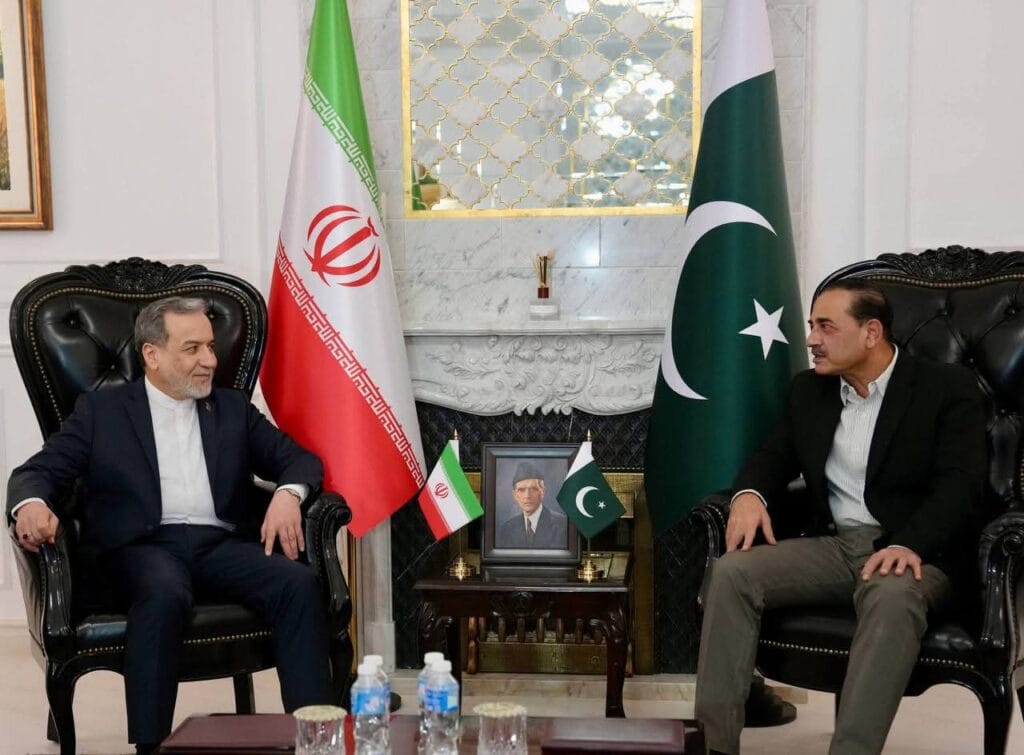
In this critical hour, a powerful voice of reason has emerged from Islamabad. Pakistan, under the direct vision and engagement of its Army Chief, General Asim Munir, has accelerated behind-the-scenes diplomacy with unprecedented sincerity. From Tehran to Washington, Riyadh to Moscow, Pakistan’s military leadership is not merely offering good offices—it is actively constructing a bridge of trust where none existed. General Munir’s recent emphasis on “economic connectivity over conflict” and his direct communication with Iranian counterparts have injected new momentum into stalled negotiations. Pakistan is no longer a spectator; it is a guarantor of dialogue.
And here is the positive prediction that defies the war hawks: An agreement is closer than the world thinks. The diplomatic signals—silent but seismic—suggest that within weeks, not months, a second round of meaningful talks will commence, leading to a phased understanding on nuclear transparency and sanctions relief. The ice is breaking. The logic of mutual survival is prevailing. War will be averted. Peace will be given a chance. And Pakistan, led by its Army Chief, will have earned the gratitude of the region and the world.
The drums of war are beating once again over the skies of West Asia. Whispers from Washington and Tel Aviv suggest a renewed contemplation of military strikes against the Islamic Republic of Iran. Such an act would not be a measured response; it would be a catastrophic escalation, devoid of any legal or moral justification. The world has watched the US “shock and awe” playbook before—in Iraq, in Afghanistan, Libya, and Syria. The results are undeniable: failed states, refugee crises, the rise of extremist militias, and economic ruin.
There is simply no justification for the United States to strike Iran again. Not now, not ever. To argue otherwise is to ignore the very lessons of history written in the blood of the past two decades.
The “Might is Right” Fallacy: Why Power Does Not Equal Justice
The core philosophical underpinning of the US threat is the archaic doctrine of “Might is Right.” Washington, possessing the world’s most advanced military, believes it can dictate terms through carrier strike groups and B-52 bombers. However, international relations in the 21st century are not a feudal brawl. Might is not right; it is merely a confession that your arguments cannot stand on their own merit.
Iran is not a defenseless nation, but more importantly, it is a signatory to international treaties (the NPT) to which the US itself is a party. The United States unilaterally withdrew from the Joint Comprehensive Plan of Action (JCPOA) in 2018—a deal that Iran was verifiably complying with, according to 15 International Atomic Energy Agency (IAEA) reports. To strike a nation for responding to your own treaty-breaking is the height of diplomatic hypocrisy. Justice is not determined by firepower, and the US must learn that it cannot bomb its way out of a negotiation it abandoned.
Iran’s Reasonable Stand : A View from Tehran
From the Iranian perspective, the calculus is devastatingly simple. Iran seeks a peaceful nuclear energy program, as is its right under the NPT. It has repeatedly opened its facilities to IAEA inspectors—more so than many US allies. The Iranian viewpoint is not one of aggression, but of deterrence.
Why does Iran enrich uranium? Because they witnessed three things: first, the US toppling Saddam Hussein (a once-enemy of the US); second, the US imposing crippling “maximum pressure” sanctions described as “economic warfare”; and third, the US assassinating General Qasem Soleimani, a state military leader, on Iraqi soil. Iran argues reasonably that any nation, facing this triad of invasion, strangulation, and targeted killing, would seek a strategic hedge.
Tehran’s standing position is logical: Return to the JCPOA fully, lift the sanctions, and we return to our limits. The US refuses to offer guarantees against further withdrawal, leaving Iran in a position of asymmetric vulnerability. Which nation is being unreasonable? The one asking for a signed contract to be honored, or the one that tore up the contract and now threatens to send jets?
The Custodians of Uranium: Why China and Russia Must Lead
Given the demonstrated unreliability of the US as a diplomatic partner, the stewardship of Iran’s uranium enrichment program must be transferred to impartial, powerful custodians. The logical guardians are China and Russia.
This is not about favoring authoritarianism over democracy; it is about pragmatism. Both Beijing and Moscow have maintained consistent diplomatic relations with Tehran and have shown a strategic interest in non-proliferation stability. By placing Iran’s low-enriched uranium stockpile under a joint China-Russia monitoring trust, the world achieves three goals: 1) Iran’s right to peaceful energy is preserved, 2) The West’s fear of weaponization is assuaged by two permanent UNSC members, and 3) The US loses its false pretext of “imminent threat.” Such a custodianship removes the fuel from the fire of war.
Why the US Escapes from the Talk Table
If the US is so certain of its righteous position, why does it consistently flee from meaningful, second-round dialogue? Because on the talk table, the United States cannot victory.
American foreign policy regarding Iran is addicted to maximum demands without minimum concessions. In negotiations, Washington seeks surrender, not a deal. The moment Iran sits down, the US demands the dismantling of its missile program, the end of regional influence, and the abandonment of allies. These are not negotiating points; these are terms of capitulation.
The US avoids talks because talks lead to compromise, and compromise does not poll well in Washington’s hawkish political climate. Furthermore, Israel—a key US ally—openly opposes any deal that leaves Iran with any nuclear capability. Consequently, the US is held hostage by an external actor, preventing it from acting rationally.
Dialogue is Not for Victory ; It is for Peace
This is the fundamental error in the US approach. Washington treats every negotiation as a battlefield. Dialogue is not for victory ;
it is for survival .
When two enemies sit at a table, the goal is not to “win” against the other. The goal is to build a framework where both sides can exist without destroying each other. Peace and prosperity for the region—from the Persian Gulf to the Mediterranean—require trade, water security, and economic integration. Wars destroy ports and pipelines; talks build them.
The crisis over Iran’s nuclear program is a crisis of trust, not of physics. Physics is solved by inspectors. Trust is solved by dialogue. Therefore, the second round of talks must begin immediately. Not preconditions. Not leaks to the press about “red lines.” Just closed doors, coffee, and diplomats who understand that the alternative is a firestorm that will cost millions their lives and trillions in capital.
Appreciation for the Bridge-Builders Pakistan’s Vital Efforts
In this bleak landscape, the role of responsible regional actors must be highlighted and appreciated. Pakistan’s relentless efforts to facilitate dialogue between Iran and the wider world are not just commendable; they are essential.
Geographically a neighbor to Iran and strategically a partner of the West and China, Pakistan understands that a war with Iran would spill over into Balochistan, threaten the China-Pakistan Economic Corridor (CPEC), and destabilize the entire South Asian energy supply. By offering its good offices, Pakistan is acting as the conscience of the region. Islamabad’s push for “dialogue and talk” over “strike and destroy” represents the sane, sovereign voice that the Middle East desperately needs. The international community should support Pakistan’s mediation efforts, not undermine them.
Verdict of History
The United States must abandon the fantasy of a “surgical strike.” There is no such thing. A strike on Iran would be met with predictable retaliation, leading to a regional war that closes the Strait of Hormuz, quadruples global oil prices, and plunges the world into recession.
War is not the solution. Missiles cannot negotiate the fine points of centrifuge cascades. Bombs cannot verify the purity of uranium hexafluoride.
Only dialogue can do that. Only talks can resolve the crisis. The world has chosen; the majority of nations in the Global South stand with diplomacy over destruction. The US must stop escaping from the table. It must accept that Iran’s viewpoint is reasonable, that might does not make right, and that the custodianship of nuclear fuel is a matter for global trustees (China & Russia), not unilateral US diktat.
Peace is a dialogue, not a declaration. Let the second round begin soon.
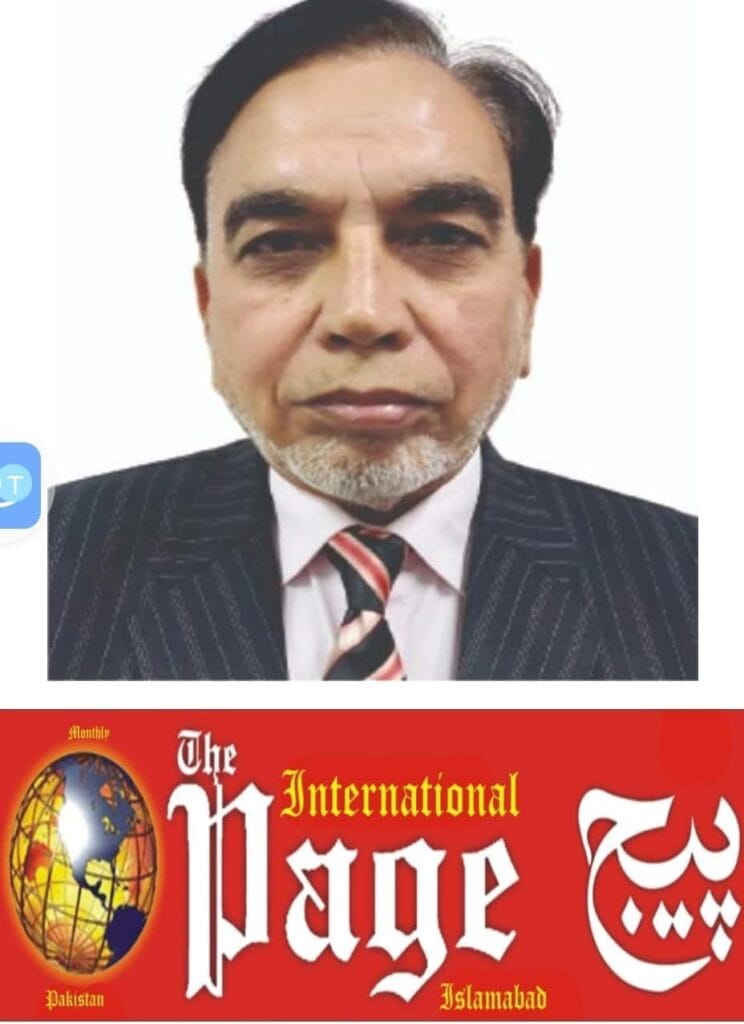
Rasheed Ahmad Chughtai